October 19,2025
Day 4 – Machu Picchu
So today, I woke up in Aguas Calientes at 5:30 a.m. and had diarrhea probably three different times before my alarm went off at six. My guide was coming to pick me up at 7 a.m. to go to Machu Picchu, and I just decided there was no way I was going to miss Machu Picchu because of diarrhea.
Luckily, I had planned ahead and brought Imodium. I’m so glad I did because I can’t imagine how hard it would’ve been to find any—or even explain needing it—in a little pharmacy where people might not speak English. And I needed it at 5:30 in the morning! So I took some Imodium, got myself ready, and separated my bags—leaving my purse and extra clothes at the hotel. My backpack was packed, and I had some coca tea and eggs for breakfast, which wasn’t much, but it was enough.
That morning, I prayed: Dear Love, what would you have me know today? The message I wrote down was clear: Walk in beauty. Walk in beauty. Walk in beauty.
I had showered the night before, so I got dressed, took my Imodium, filled my water bottle, added electrolytes, and got everything ready to go. But then, right before leaving, I had to use the bathroom one last time—kind of urgently. There was one women’s stall and one men’s stall, and the women’s was occupied for so long that I started panicking. Finally, I just decided to go into the men’s bathroom, and that was absolutely the right choice.
My guide, Roberto (it seems like everyone on this trip is named Roberto!), met me and we walked to the bus station. It was a bit of a rocky start because he asked if I had my bus ticket, and I realized I hadn’t noticed it in the materials I’d been sent. I’d seen the Machu Picchu ticket PDF but hadn’t realized the bus ticket was also there. Thankfully, it was—I just hadn’t known what I was looking for.
When we got in line, Roberto kind of cut ahead, saying, “Oh, my friend was here.” I think he had arranged something with another guide or friend earlier. He left me in line for a bit, saying he needed to go get his bus ticket. As the line started moving, he still wasn’t back, and I started getting nervous—like, am I going to have to go alone? I messaged Percy, the guy I’d been coordinating with, but then Roberto reappeared just in time, ticket in hand.
He clearly knew the ins and outs of how everything worked—he’s been doing this for years. The bus ride up to Machu Picchu was both incredible and terrifying. The road is steep, narrow, and full of switchbacks, and the buses go fast. I can’t imagine being one of those drivers!
As we rode, Roberto told me all about Peruvian history—the Spanish colonization, the carving up of South America, the corruption in government. He said the past five Peruvian presidents are all in jail, which I found both shocking and kind of satisfying. (I thought, wow, imagine if we could actually put our corrupt presidents in jail!)
He also told me about Hiram Bingham, the Yale professor who “discovered” Machu Picchu, and how the Peruvian president at the time basically gave him control of the site in exchange for getting his son into Yale—a story tangled up in racism and elitism.
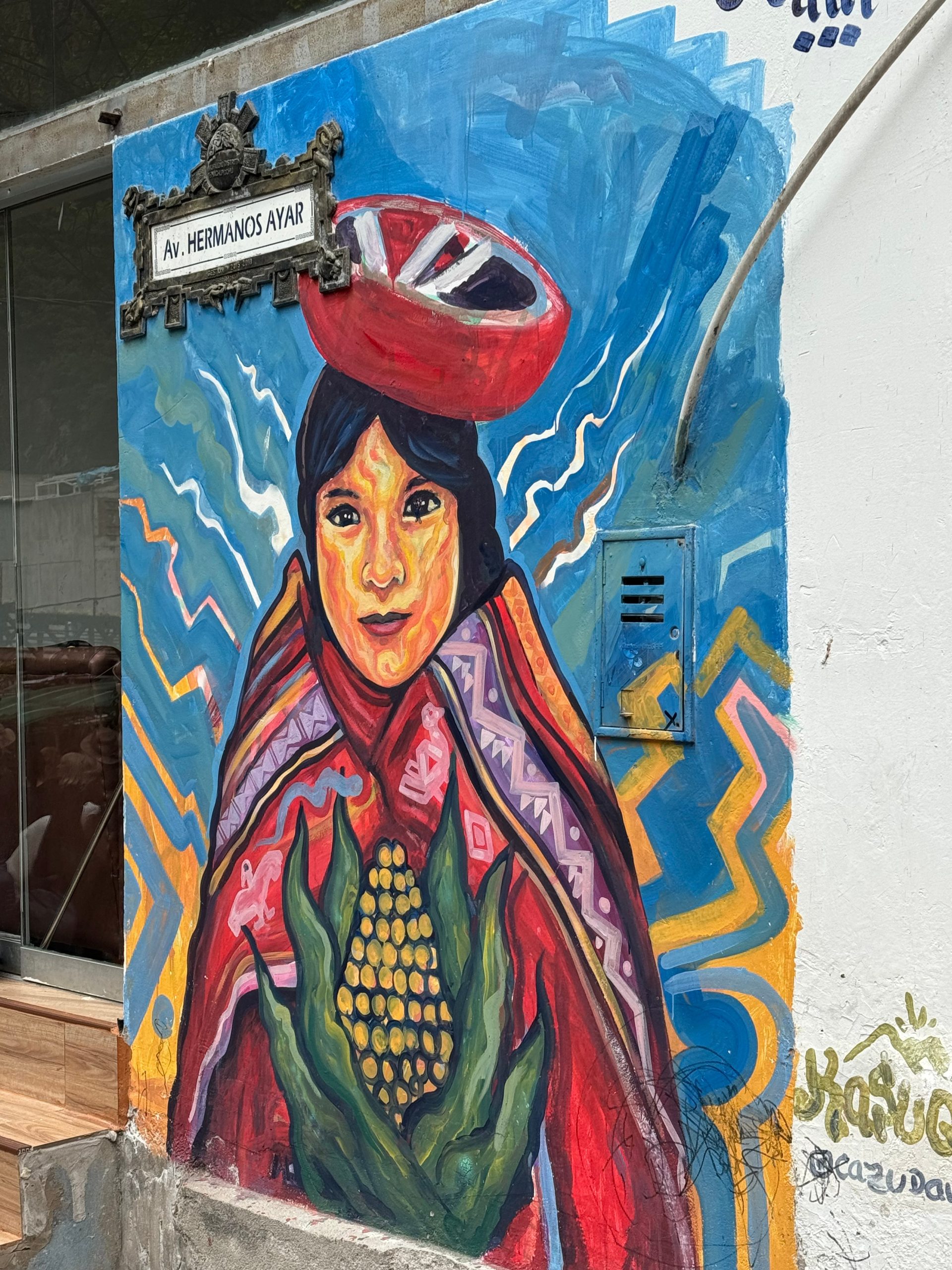
Roberto explained that “Machu Picchu” means “Old Mountain,” but that’s not the site’s real name—no one knows the original Inca name. At the end of the tour, he told me his personal theory: that the real name might have been Machu Picua, meaning “Big Bird.” From above, he said, the layout of the site forms the shape of a condor.
When we finally arrived, he told me to use the bathroom before going in. It cost 2 soles, and when I handed over a 5, the woman just waved me through without giving change. I guess you need exact coins! Thankfully, the Imodium worked—no more emergencies—and we started the tour.
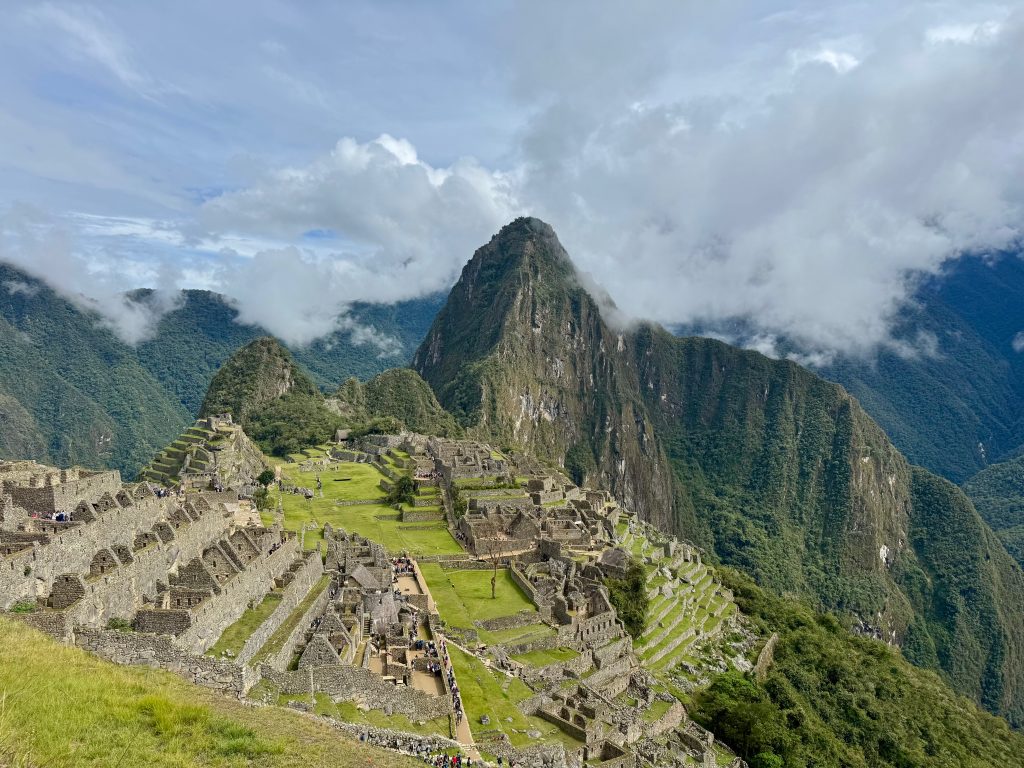
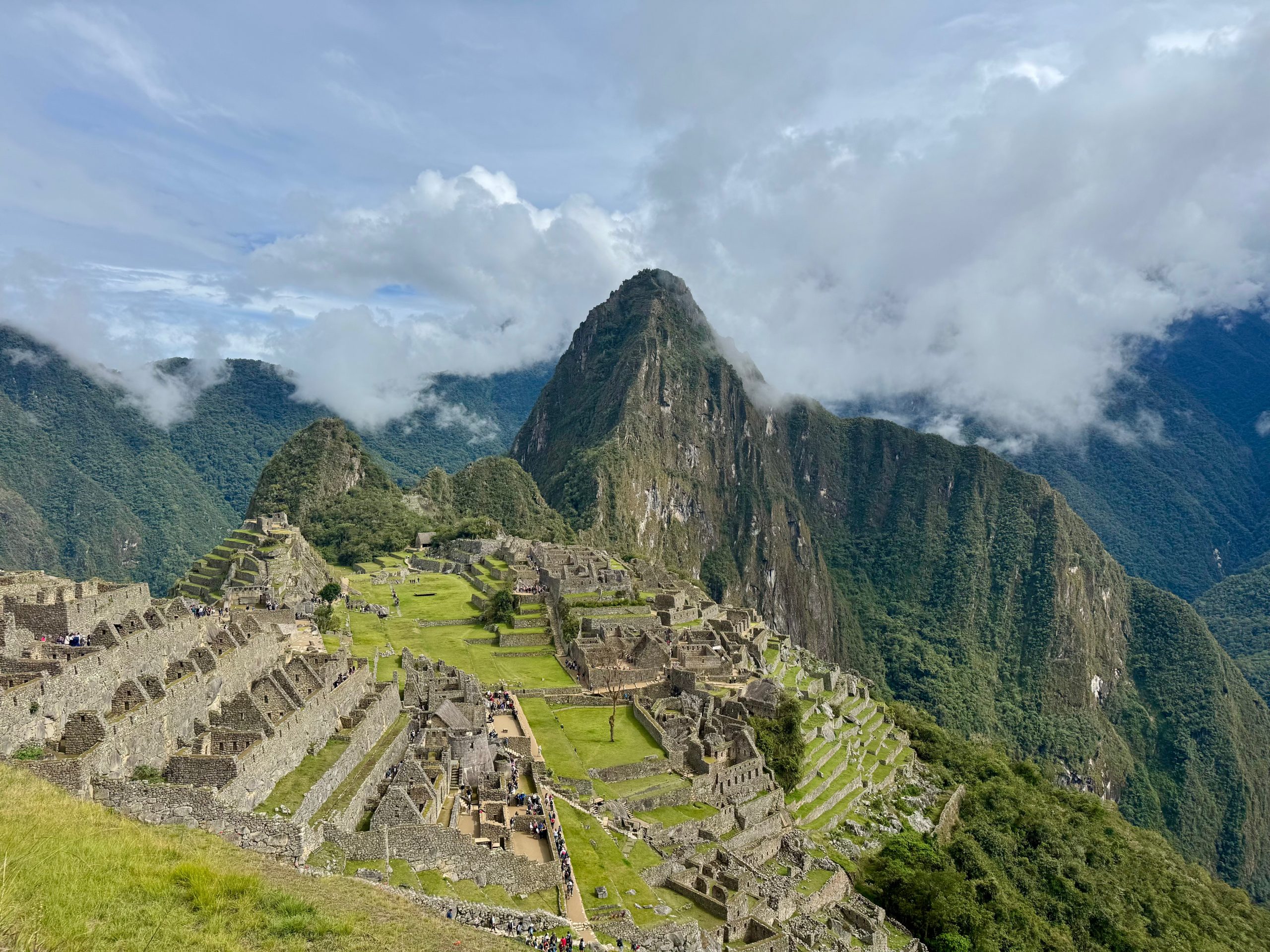
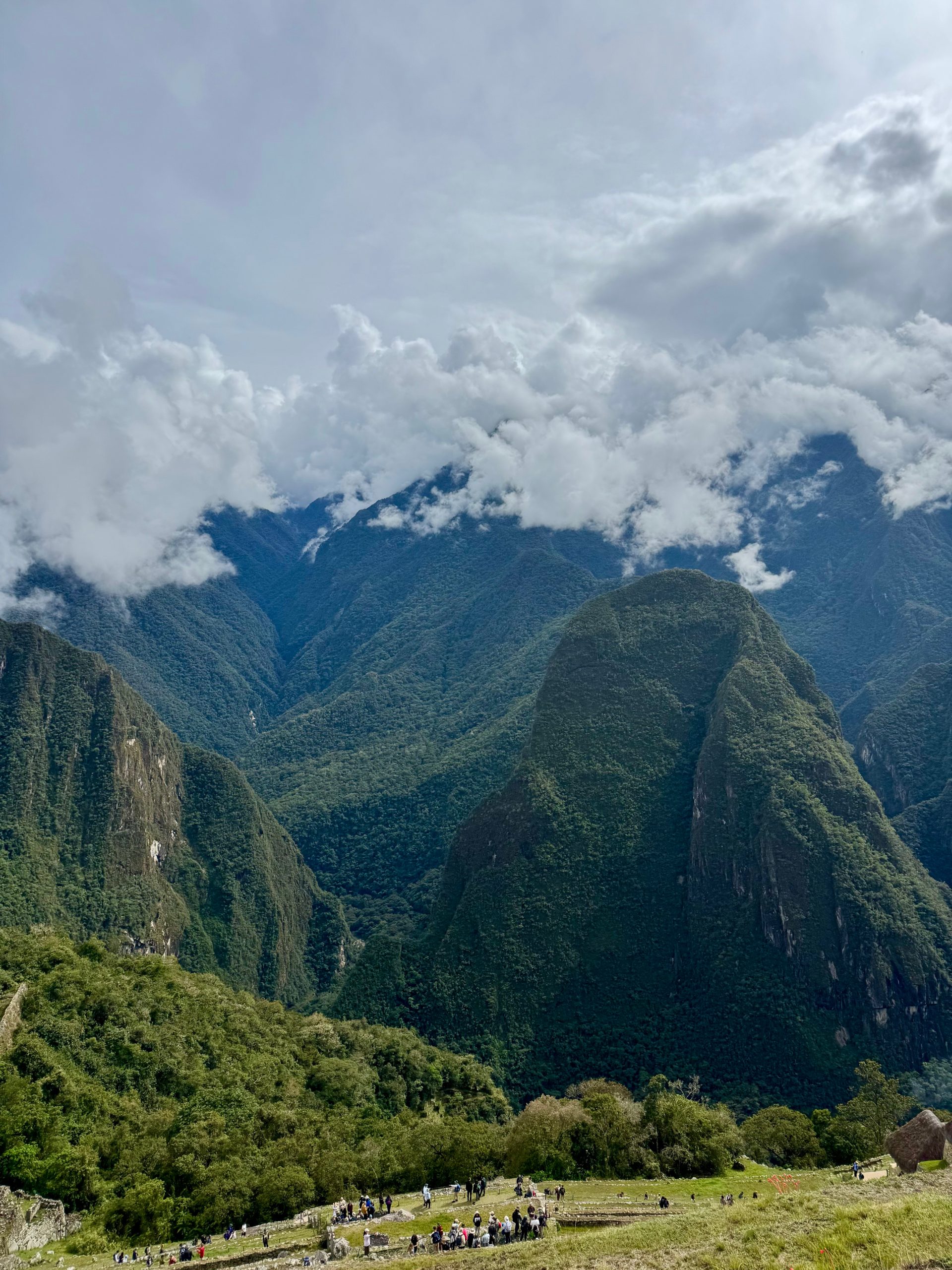
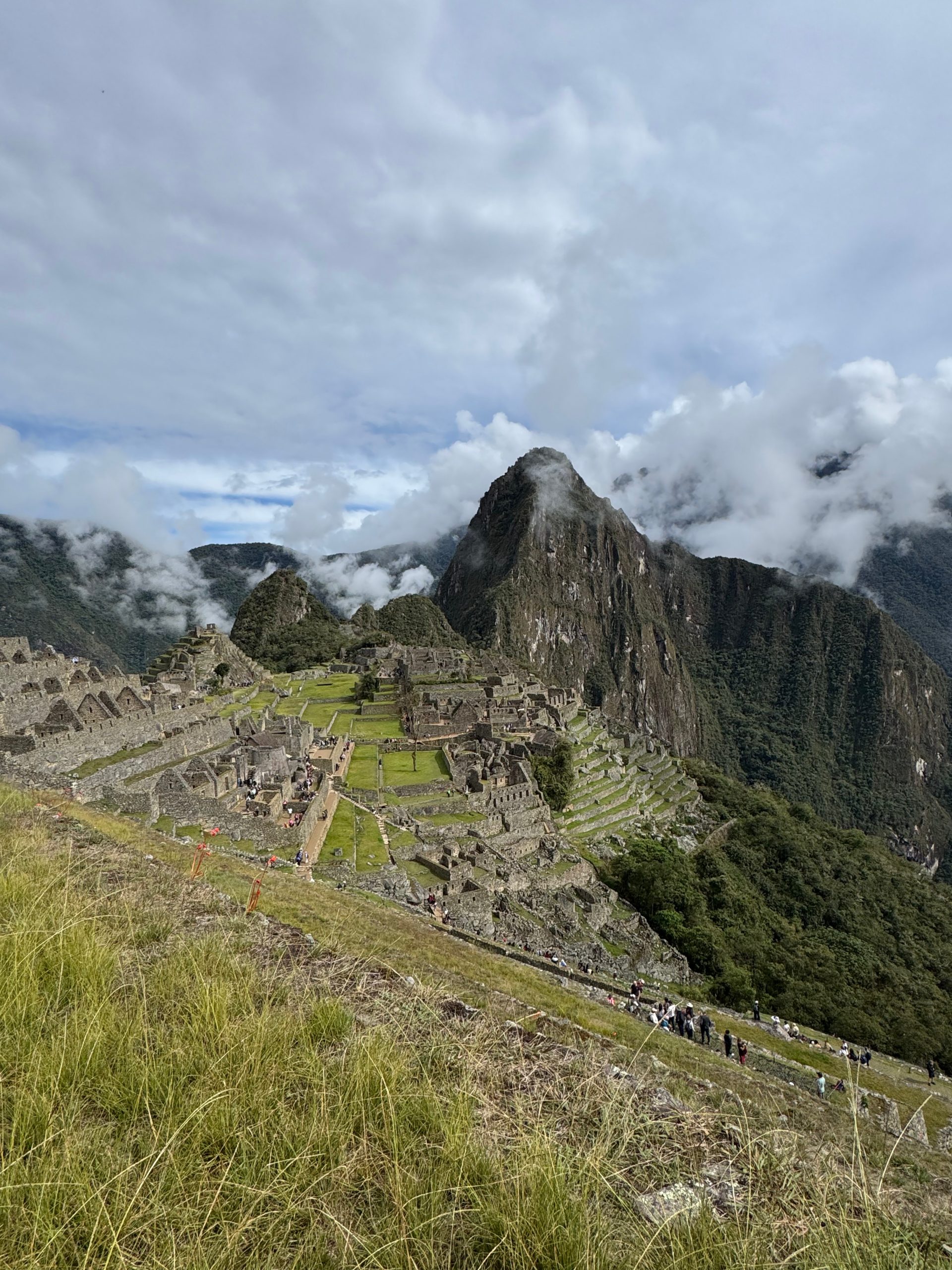
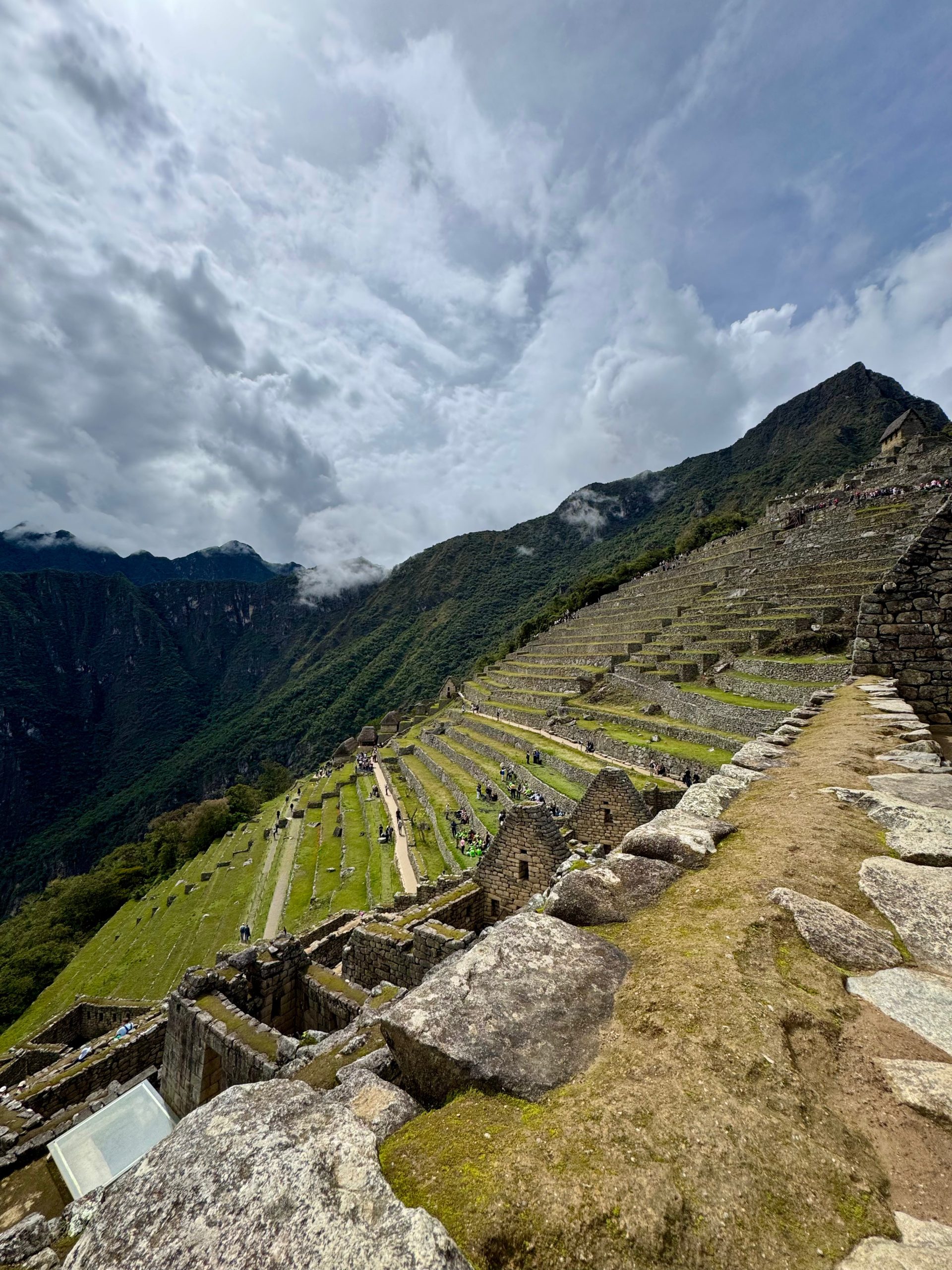
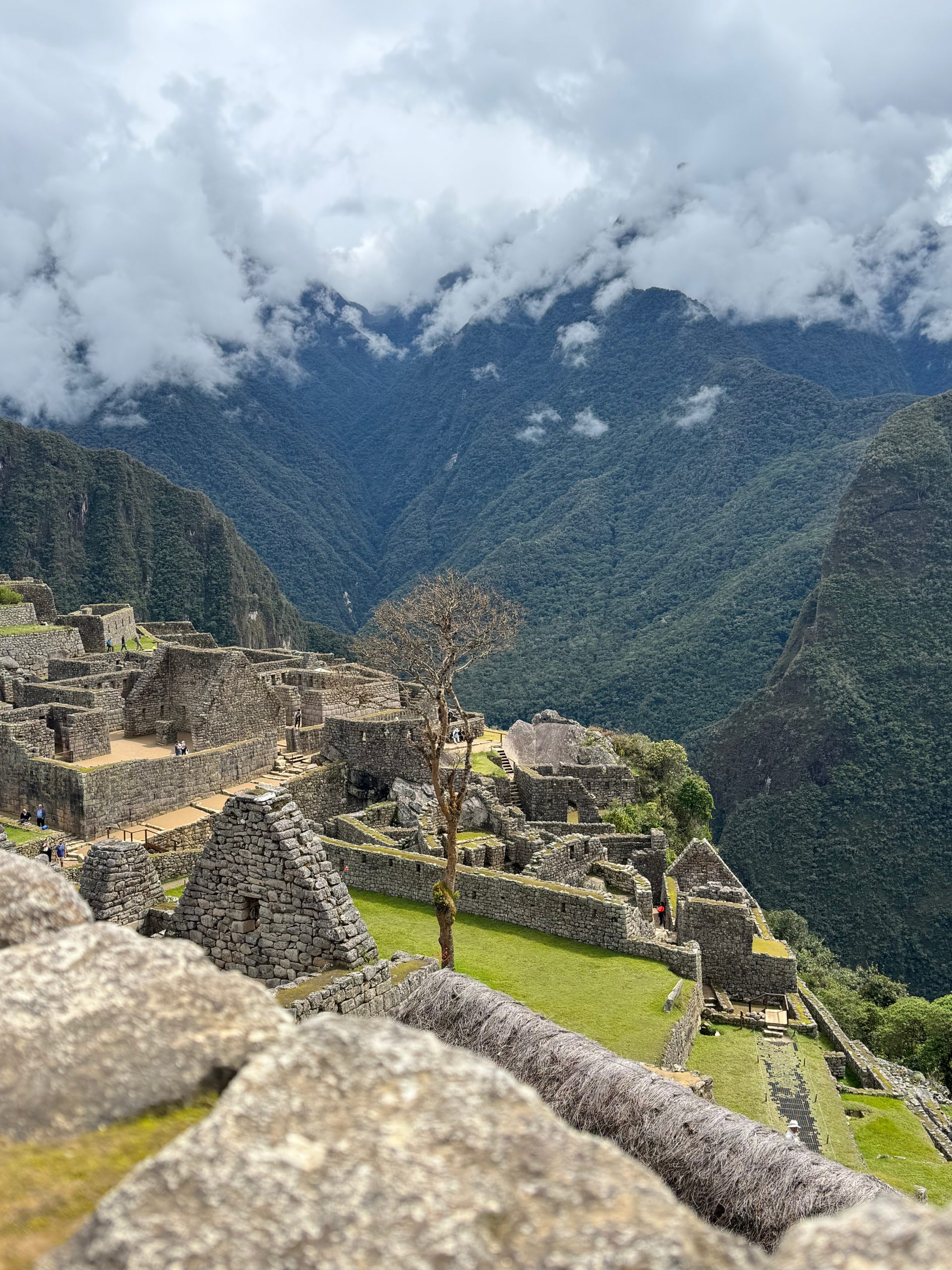
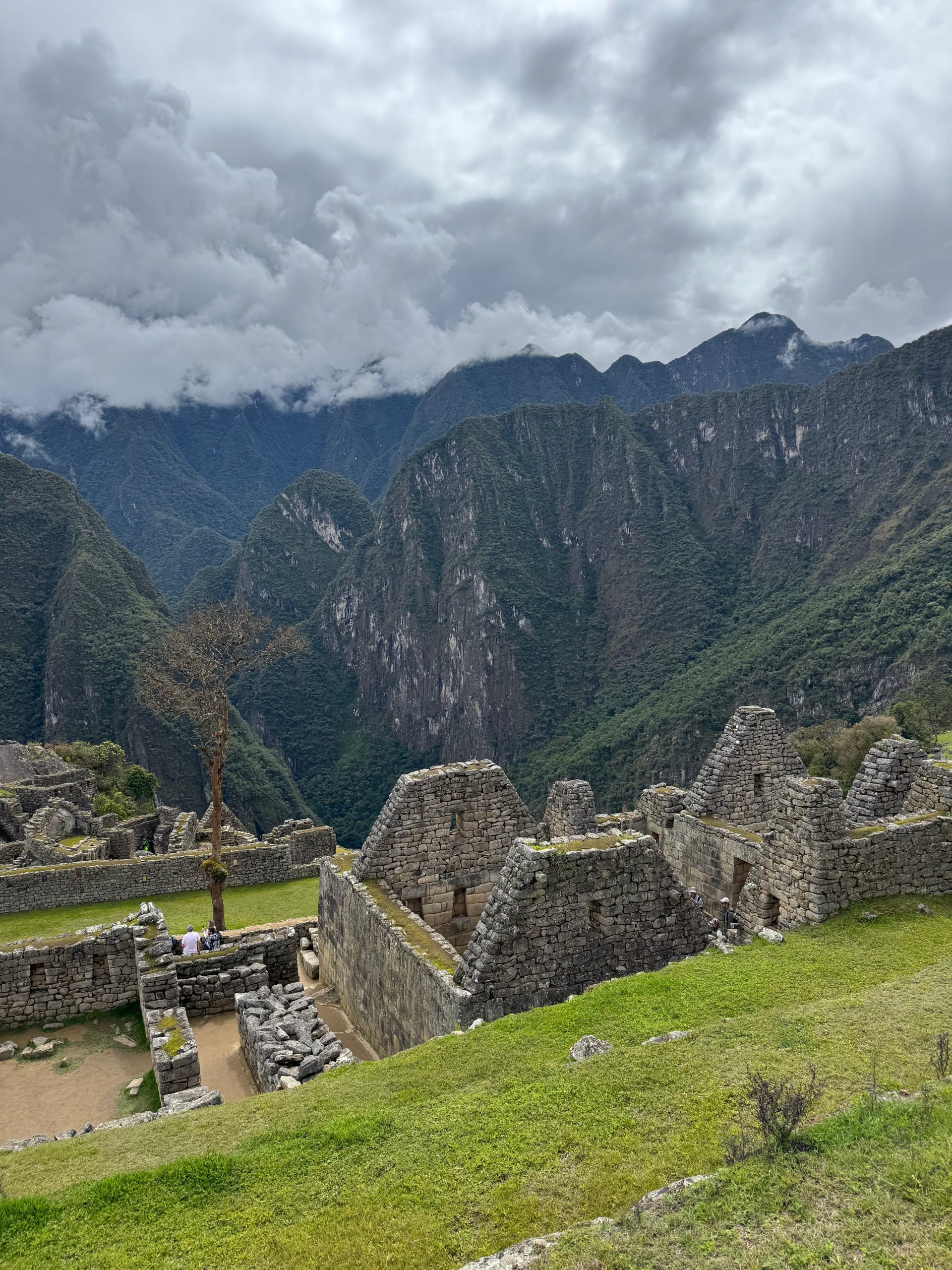
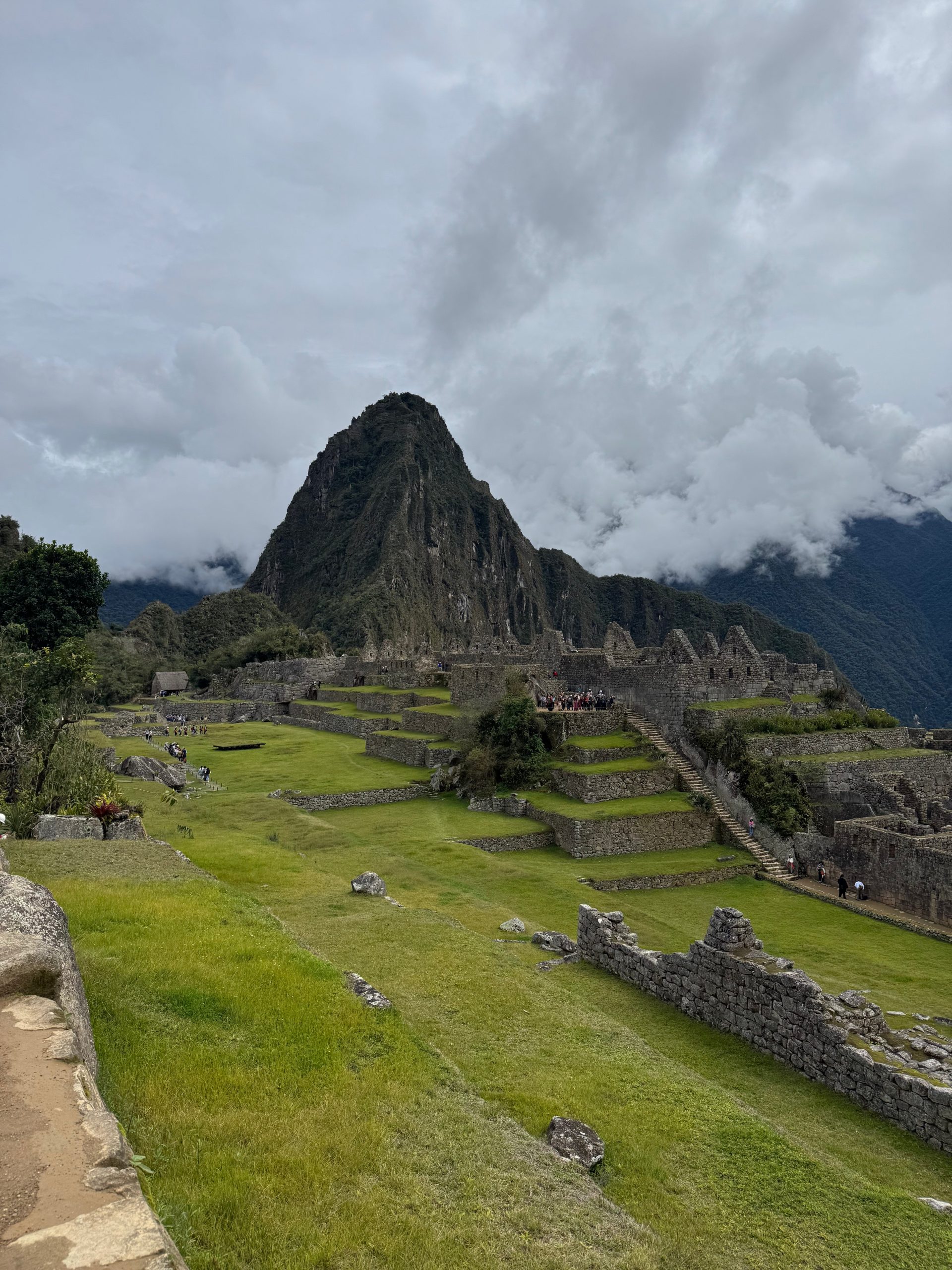
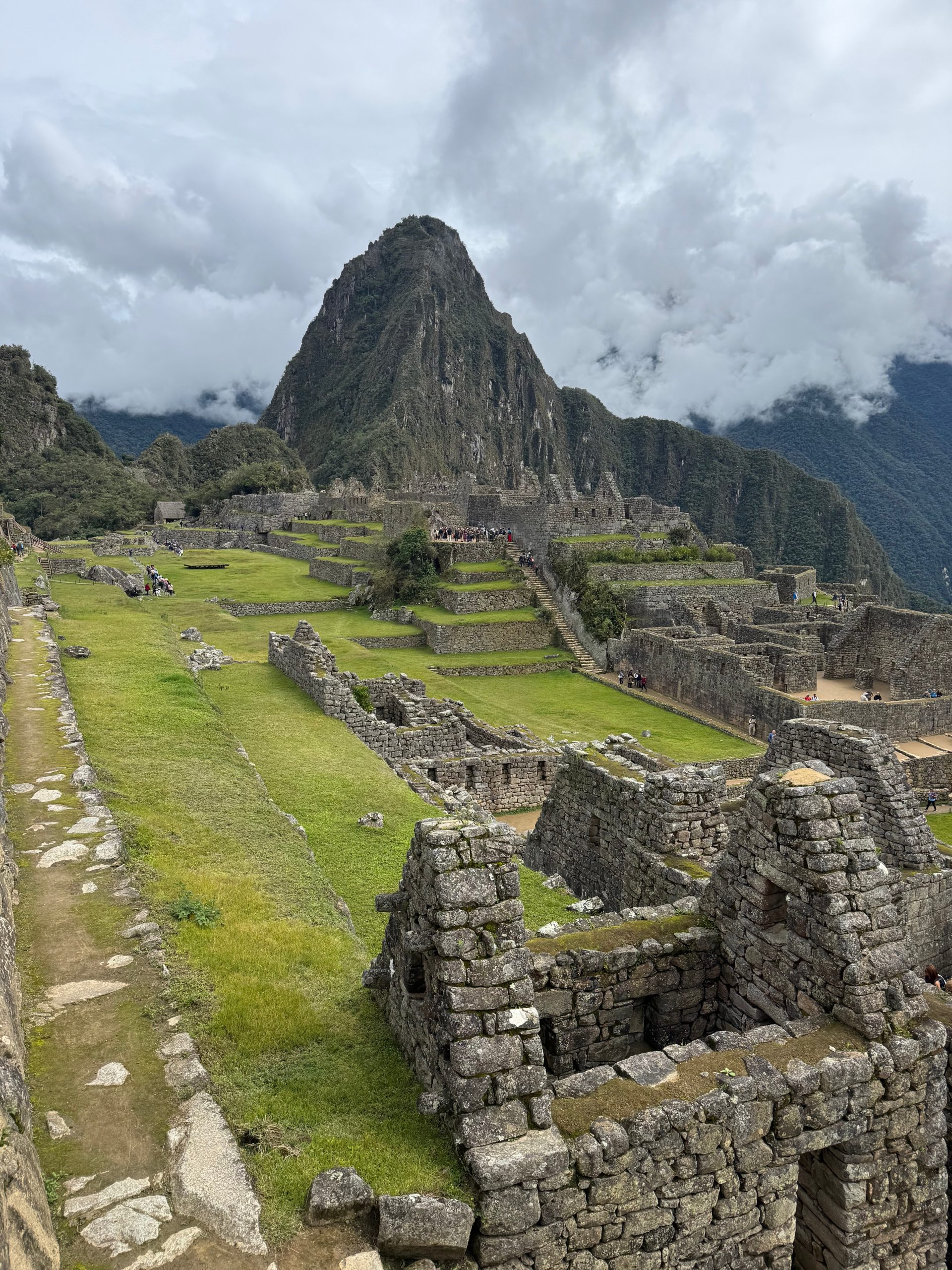
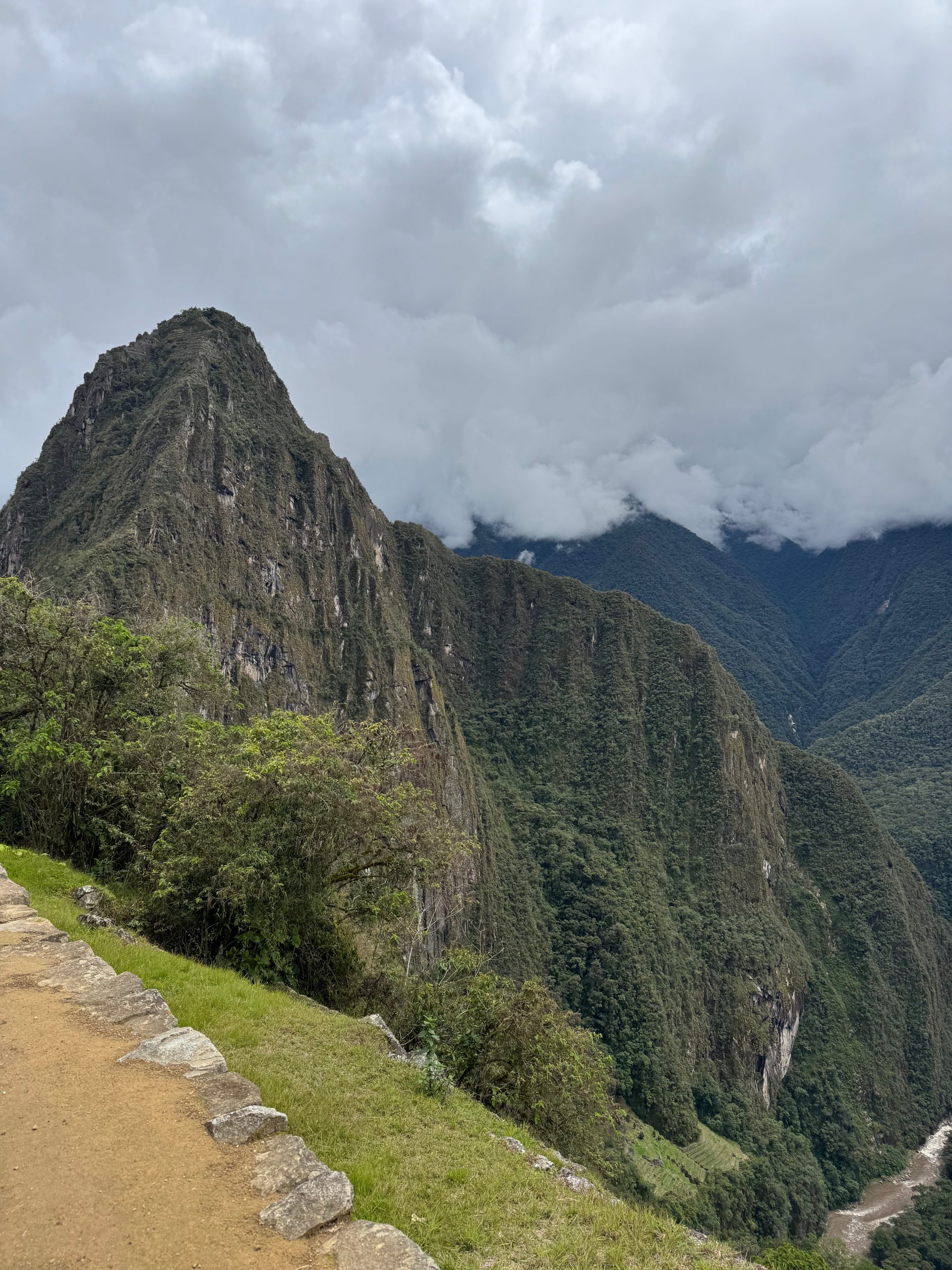
When I climbed up to get my first view of Machu Picchu, I just started sobbing. I could’ve stopped myself, but I didn’t—I didn’t want to. It was uncontrollable. I was overwhelmed by how beautiful it was. I cried loudly and openly. Several times throughout the day, I’d just look at the mountains and start crying again.
Roberto was so kind. He gave me a hug and said, “You must be an artist.” I think he meant that I’m a sensitive soul.
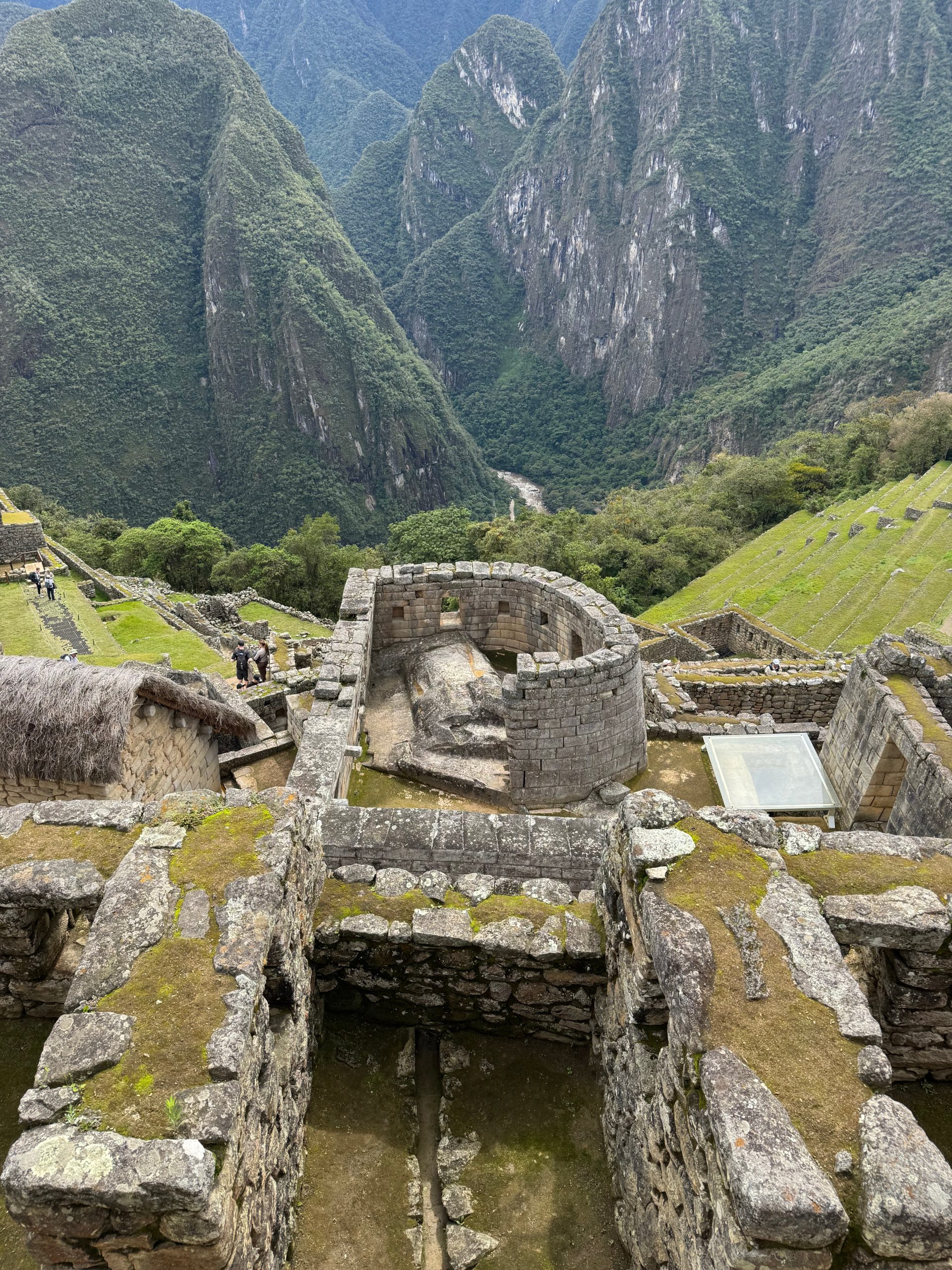
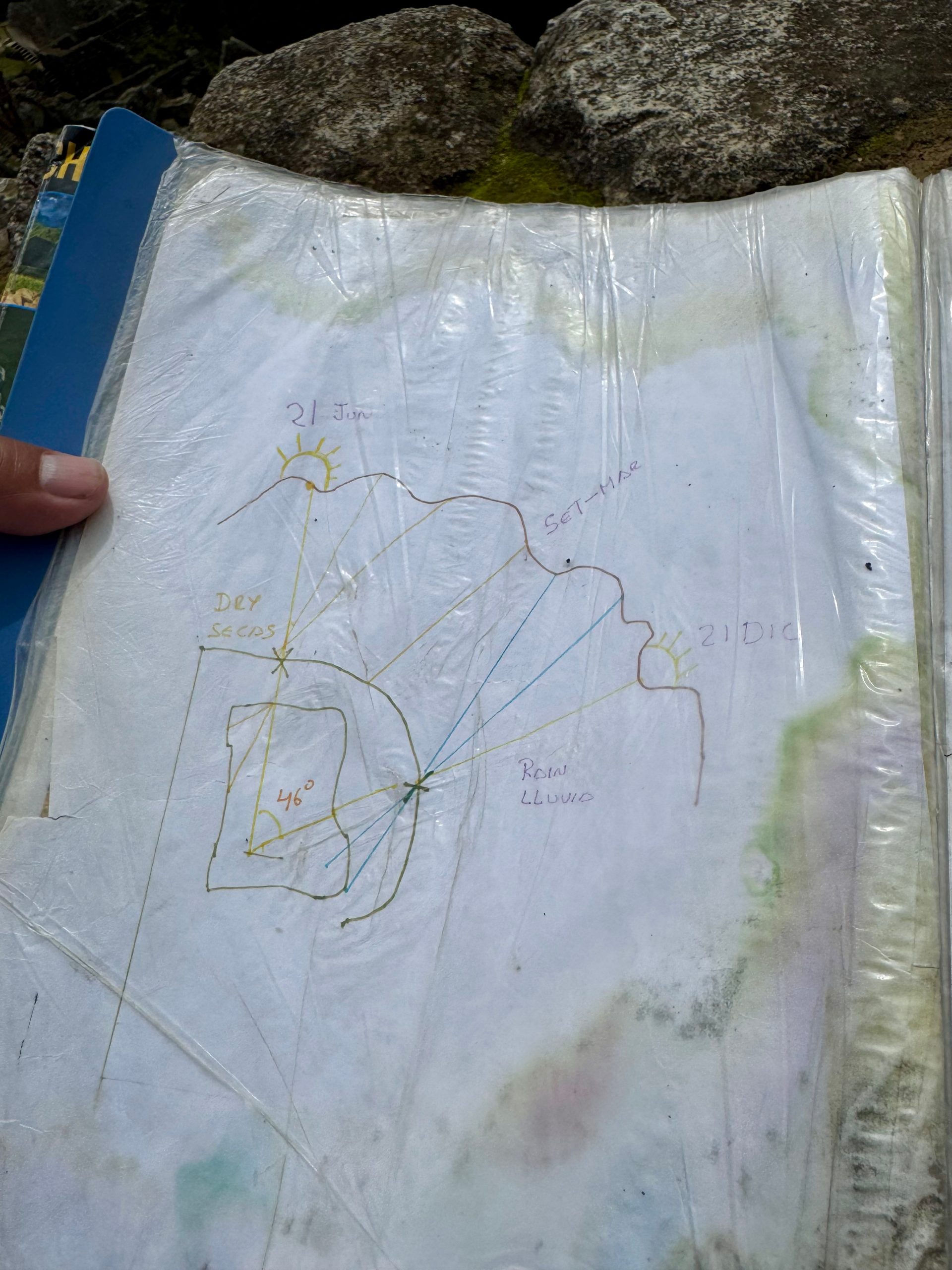
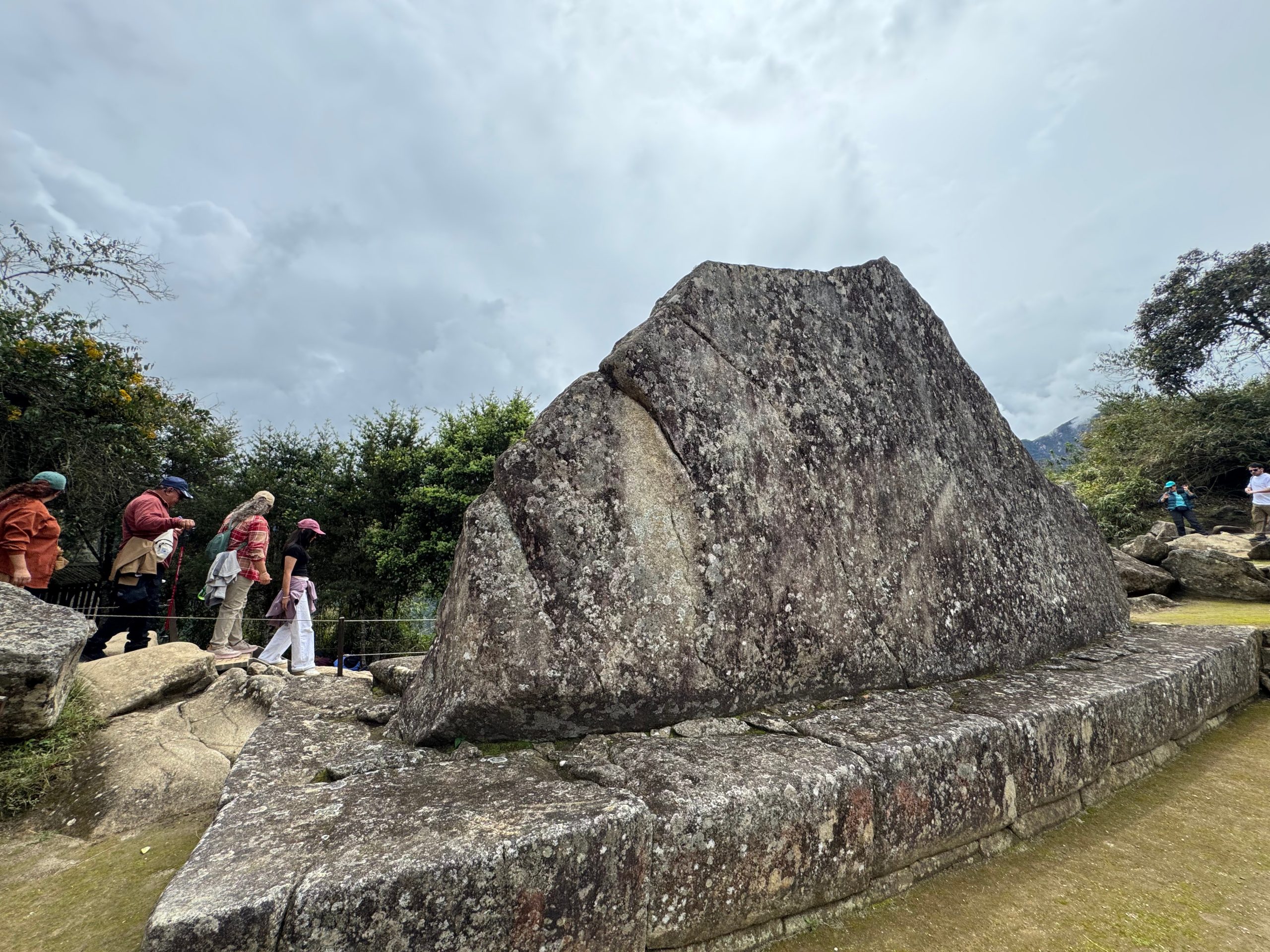
He carried this old, worn plastic notebook full of laminated pages—photos, drawings, and diagrams. He showed me hand-drawn illustrations of the Temple of the Sun and how sunlight passes through at different times of the year during the solstices. He explained how the Incas used the shadows as a calendar to track when to plant and fertilize.
He talked about their agriculture—how they grew corn, peanuts, tomatoes, chilies—and how they traded food with people in the higher mountains in exchange for loyalty. So smart.
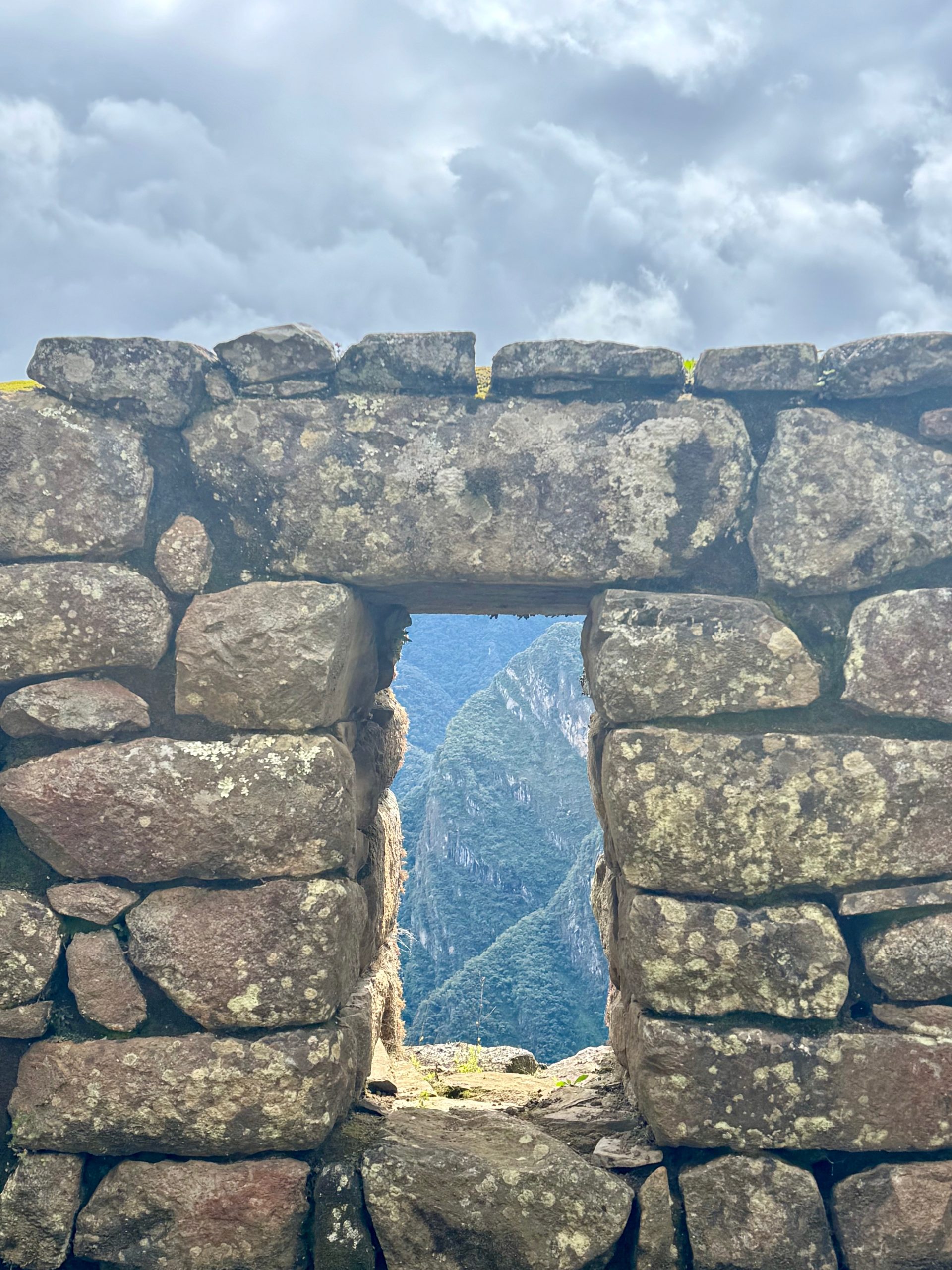
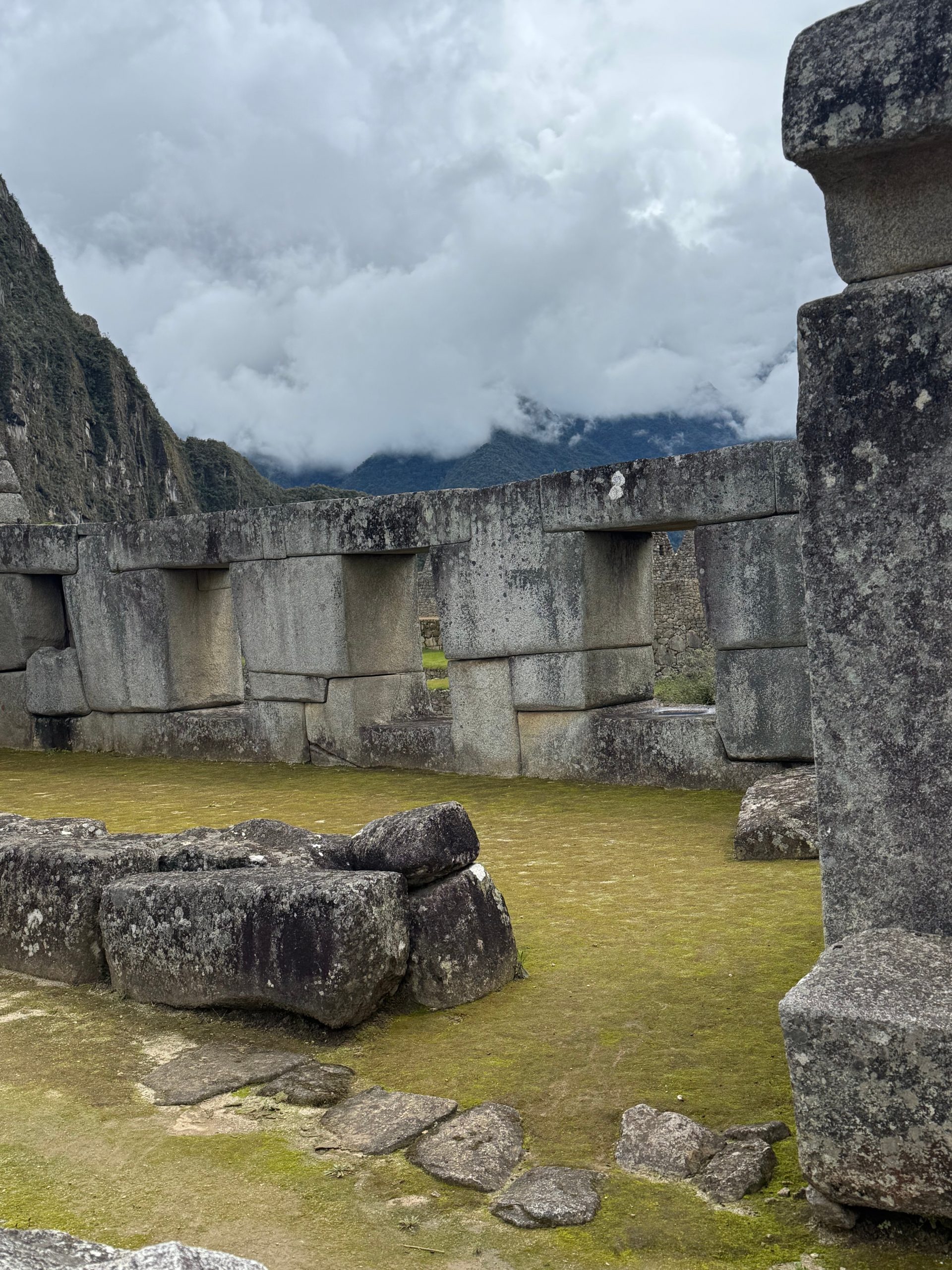
He said Machu Picchu took two generations to build. The early work used huge stones carved directly from the mountain, fitted perfectly without cement. Later, the son of one of the main builders got impatient and started using dynamite to speed things up, so you can see the difference between the early, solid foundations and the later construction.
After Hiram Bingham’s discovery, others made changes that weren’t true to the original architecture, until the government finally declared the site protected. Now nothing can be altered.
Roberto told me about the hippies who came in the 1960s and 70s for the hot springs and spiritual energy, which helped make it famous. He seemed to know every other guide there, greeting people easily and gracefully weaving through crowds. He was calm, grounded, and deeply spiritual.
He told me he’s been invited to many ayahuasca ceremonies and that sometimes, in ceremony, the stones speak to him. What they say isn’t for him to share, but sometimes shamans recognize the same message. He said the shamans communicate with the mountains—that prayer isn’t always words, but dance and song. That joy itself was their offering.
He showed me a picture of what the site once looked like—smooth stuccoed walls, bright and finished. He pointed out the main field that used to be a marketplace, where an obelisk once stood before it was removed. Apparently, people even used to play soccer there before regulations!
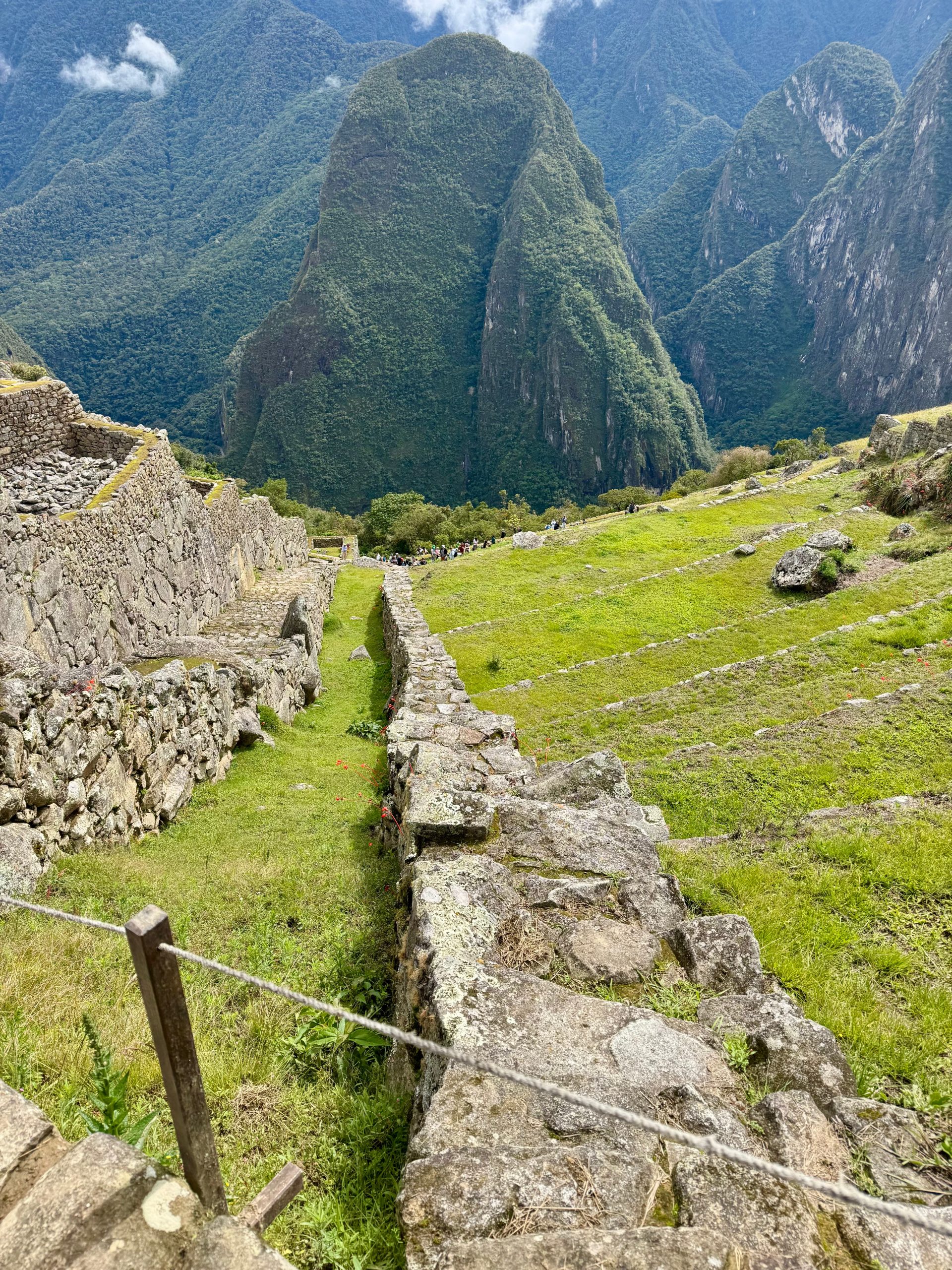
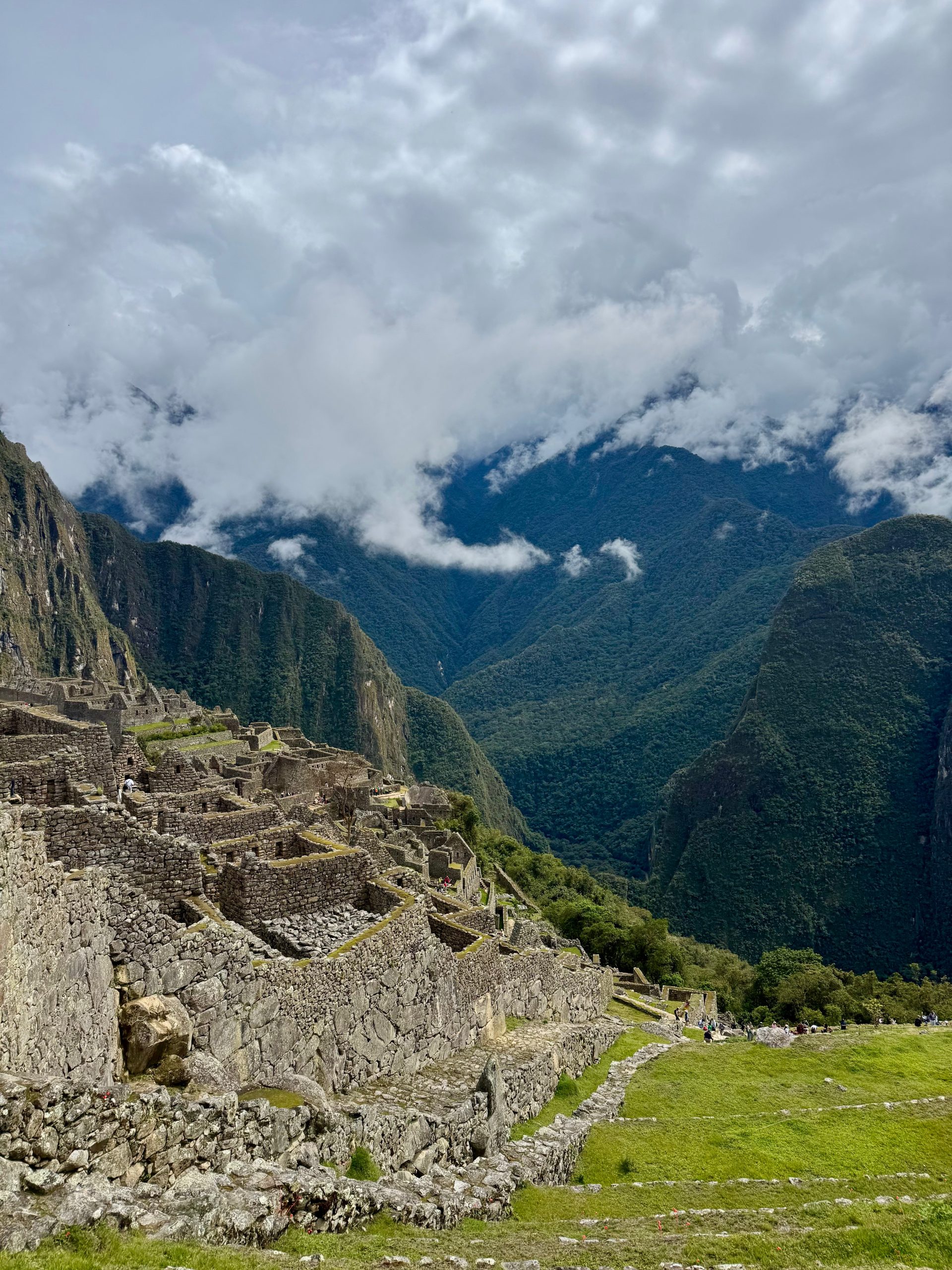
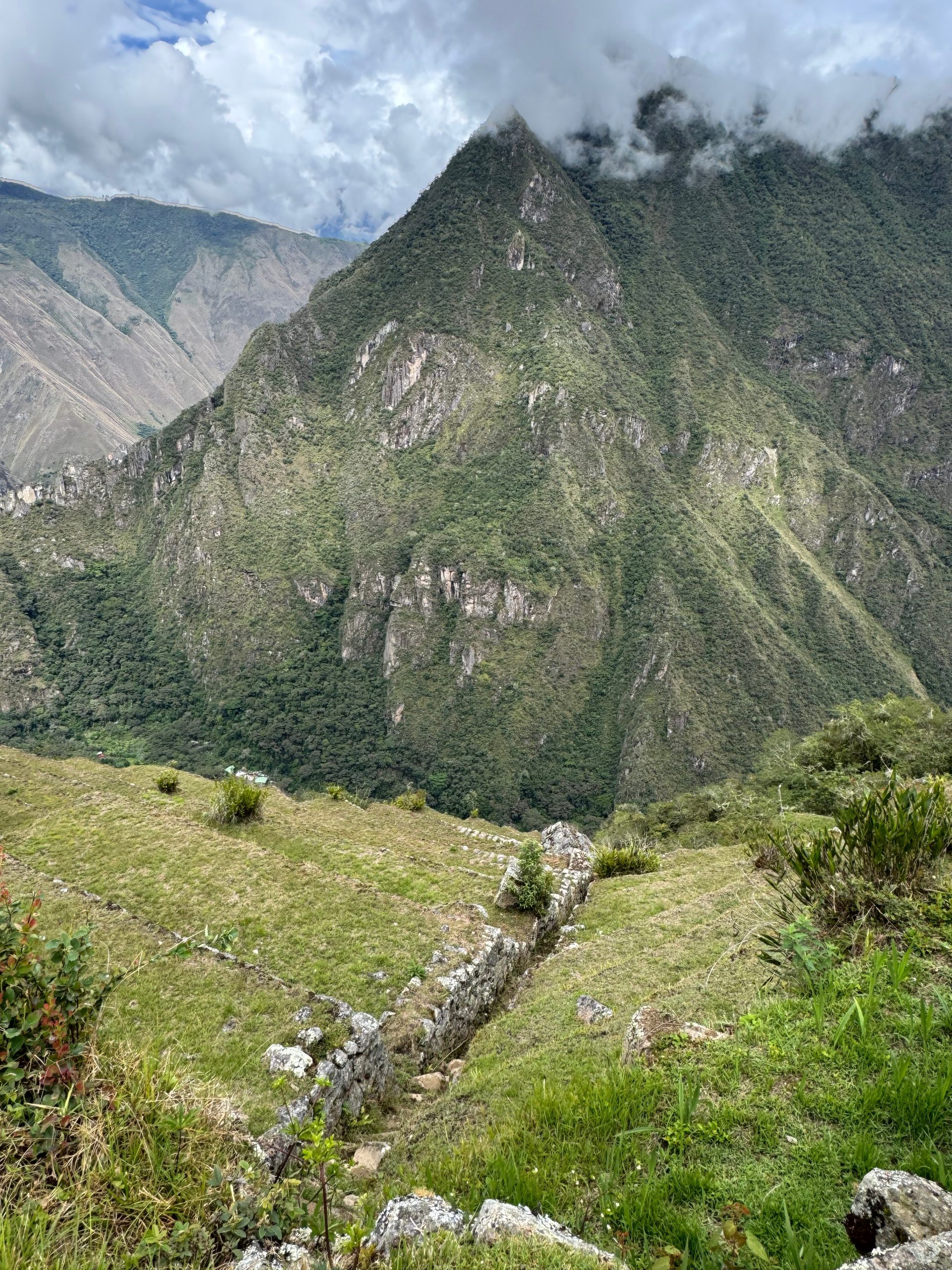
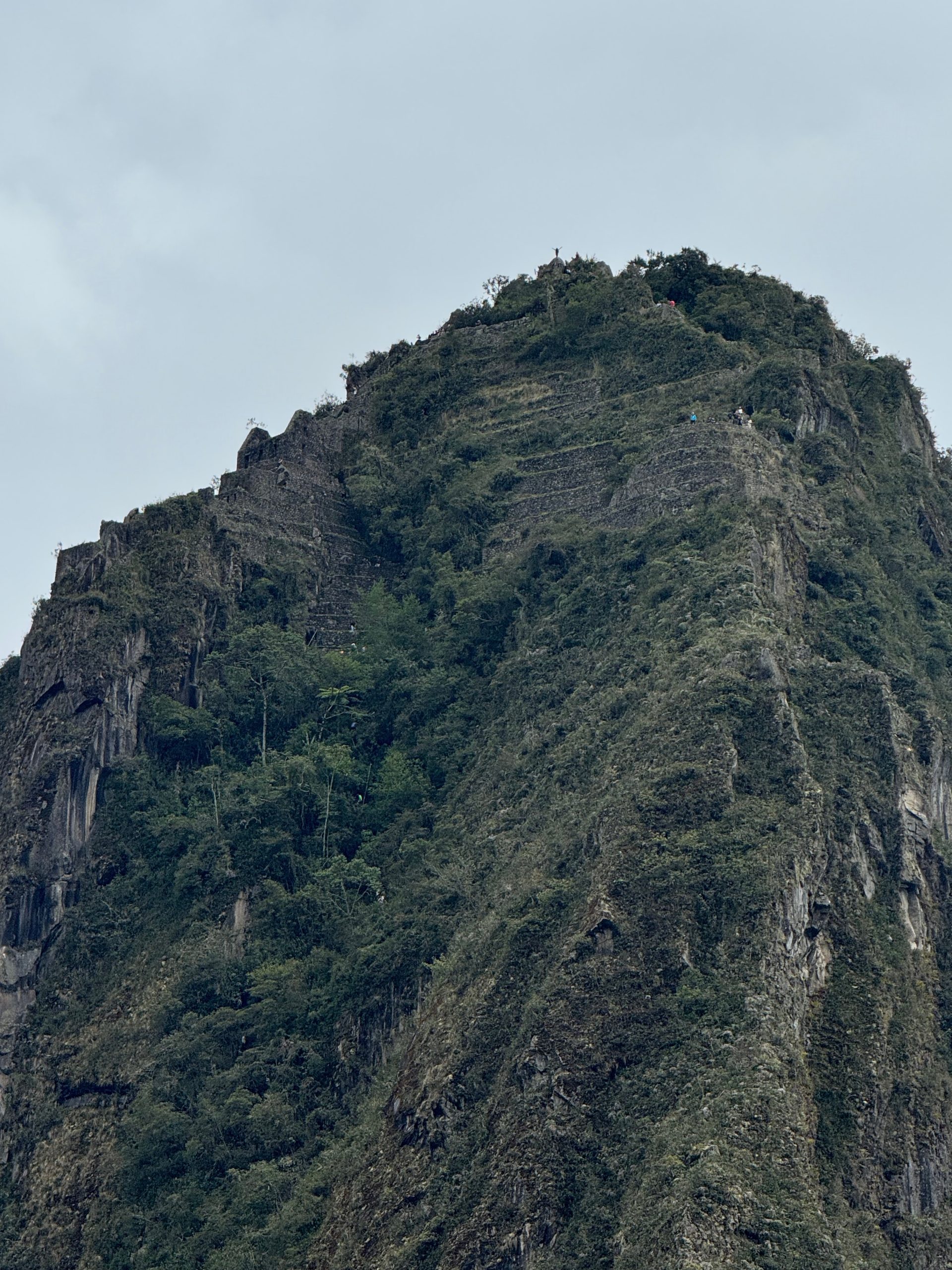
We saw terraces, temples, and the sacred top of the site where only 200 people a day can go. It’s wild to imagine. I was amazed by how doable the walk was—slow and steady, never too hard. Roberto took so many photos of me (all terrible, bless him), and I kind of wish I’d gotten one with him.
When the tour ended, he just sort of disappeared—poof. I walked out, caught the bus back down, and the ride felt smoother this time, even though I was in the back where it bounced the most. Those drivers are something else.
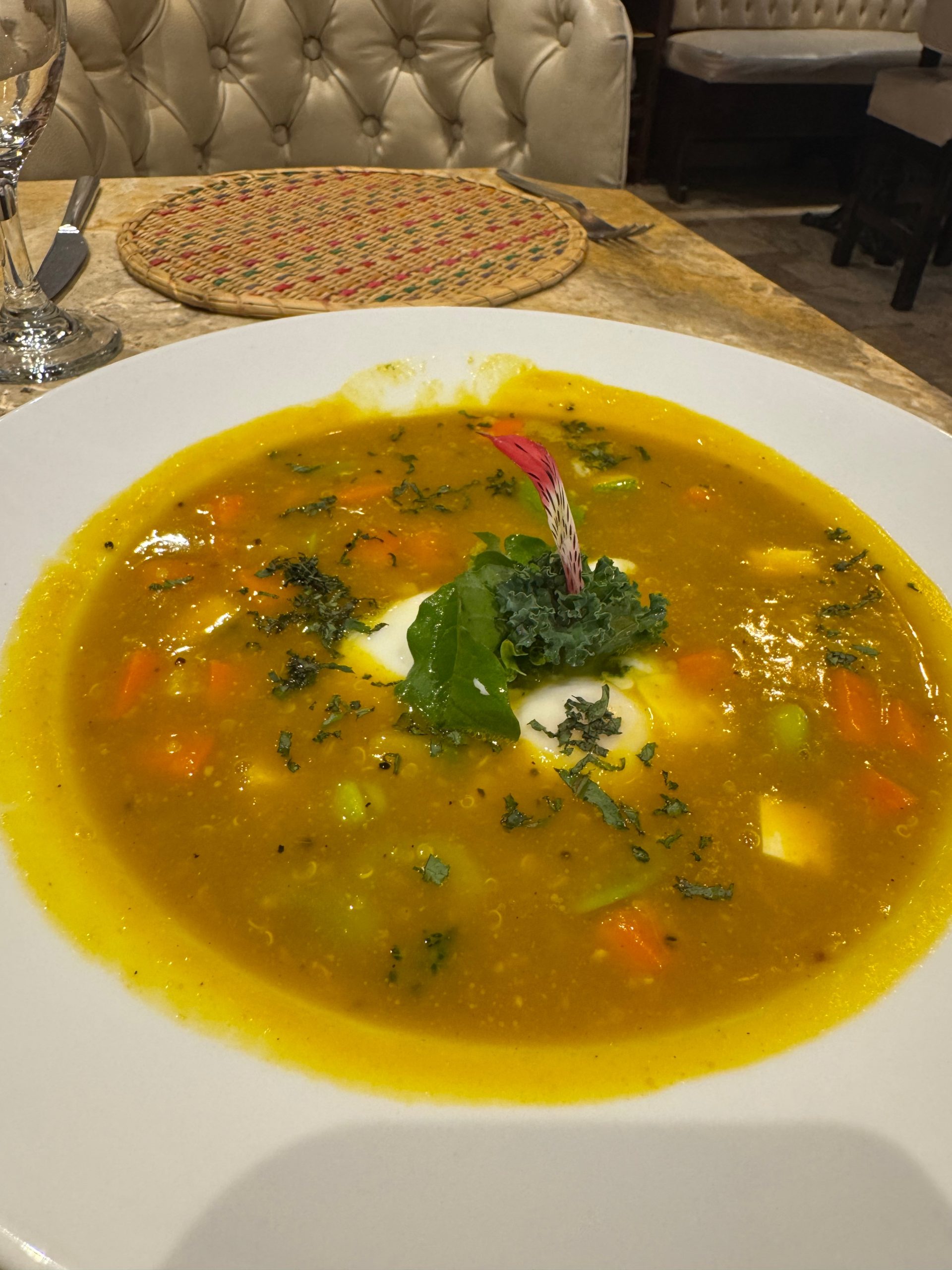
Back in Aguas Calientes, I stopped for lunch and had quinoa soup with an egg in it. It was delicious, though I was wary of quinoa since that’s what I’d eaten before my 5:30 a.m. ordeal. Still, it sat fine. I just felt cautious and hungry but queasy, craving something simple—like rice, eggs, steamed veggies, or sweet potatoes. I’m really looking forward to getting to the retreat center tomorrow.
Aguas Calientes was overflowing with shops and restaurants—beautiful things everywhere—but I couldn’t carry another ounce. My bags were maxed out, so I skipped shopping.
The train ride back to Ollantaytambo was beautiful—lush jungle giving way to drier mountains, waterfalls spilling down the cliffs, and the Urubamba River rushing beside us. It rained most of the way, the train windows fogging up, everything humid and steamy. I loved it.
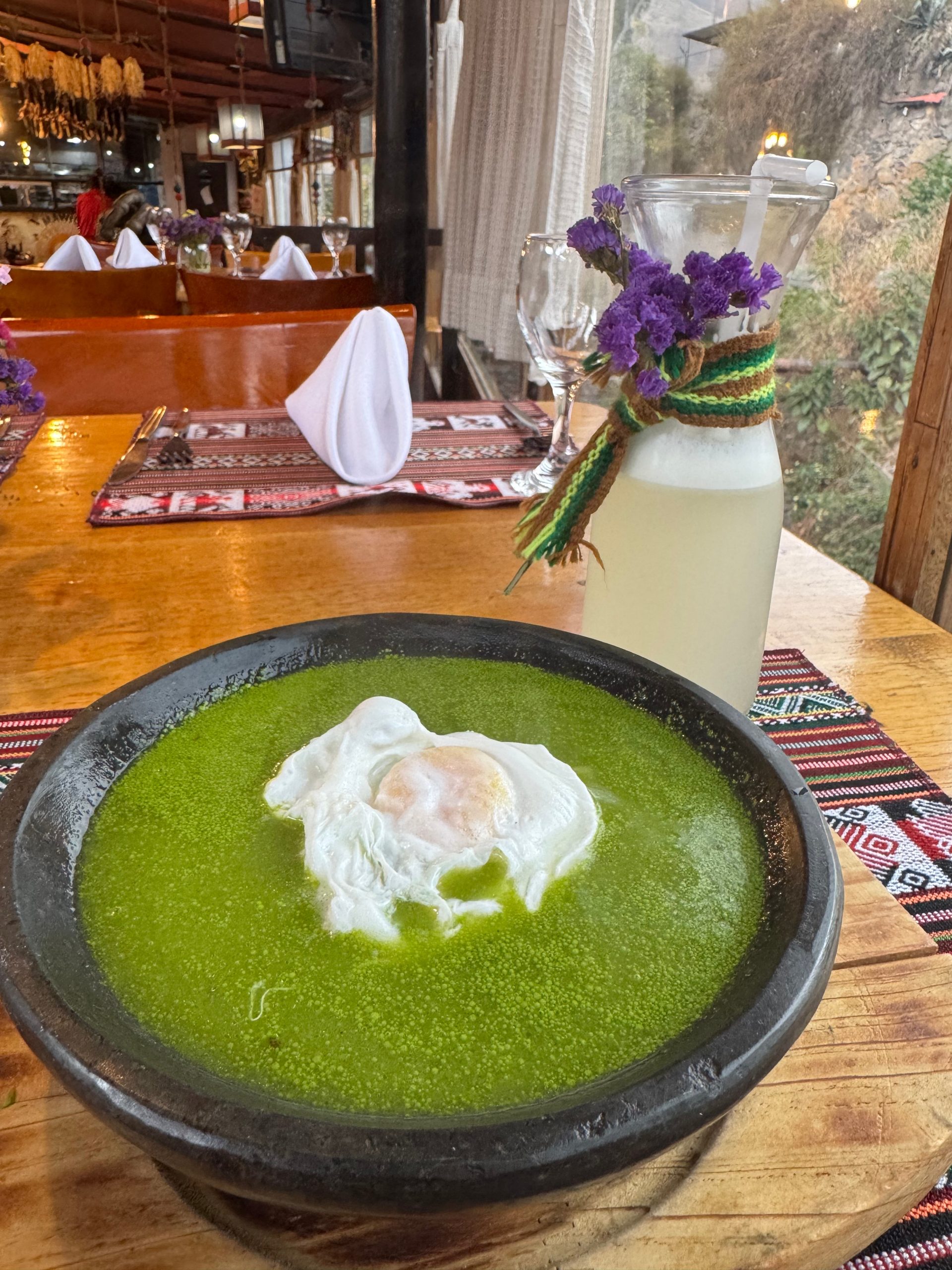
When we arrived, I looked for a taxi, but everything was full. It was raining, so I ducked into a little restaurant to wait it out. I ordered lemonade, corn soup, and a salad. The place was chaotic—the main waitress had her child there, who was screaming, and everyone looked exhausted. The owner barely spoke English, even though it’s such a tourist town, and it took ages for the food to come.
The lemonade was amazing—sweet, maybe with pineapple. The corn soup was green with an egg and bits of cheese (which I picked out), and the salad they brought was wrong. It had prosciutto, pickles, creamy dressing—so many things I wasn’t supposed to eat—but I just did my best, picking around it. I ate the avocado, mango, and greens and called it good.
When I went to pay, they were all sitting down for a family meal, so I just left 100 soles and slipped out.
I finally got a taxi, but the driver thought I wanted to go to Cusco. I had to use Google Translate to explain that I just needed the town square. When we got close, he couldn’t drive me all the way, so I walked the last five blocks in the rain on slick cobblestones with all my bags. I was so tired and afraid of slipping. By the time I reached my place, I was completely over it.
The door situation was ridiculous—three separate locks that had to be turned multiple times. I couldn’t fit through with my bags, and my patience was gone. I finally made it in, took off my shoes, then had to unlock my bedroom door too. I showered, unpacked, charged my devices, and thought about going back out to shop—but I just couldn’t face those wet stones again.
It was maybe 6:30. I stepped outside briefly when the rain cleared—the mountains were dark and the clouds glowed softly. I turned on the deck light and sat outside for a few minutes, then came back in, made some tea, got in bed, and watched Loot.
Now, as I record this, I’ve had some diarrhea again. I don’t feel great. But despite that, it was a really good day.
Dear love, strength and adventure,
What would you have me know today?
My dear,
Go slow, breathe, enjoy every step. There is no rush. This is your time, your day, have it.
These mountains and valleys love you. You have done everything you can to prepare yourself and get here in a good way. Walk in beauty my love. It’s what you are here to do. Do not let yourself get overwhelmed. It’s okay. Walk in beauty. Walk in beauty. Walk in beauty.

Travel Details
Aguas Calientes to Machu Picchu
meet guide, Hugo, at 6am at hotel – tour ends 10am
For any last minute communication please contact us to our emergency phone/whatsapp number: +51 996 550 700
Aguas Calientes Airbnb check out 10am –
Aguas Calientes to Ollantaytambo
Perurail Station – train leaves at 1:37pm Arrive at least 30 minutes prior to the scheduled departure time.
| ABIGAIL KOJOLA | MACHU PICCHU – OLLANTAYTAMBO | Expedition 204 | 10/19/2025 | 13:37 (1:37pm) | 15:04 (3:04pm) |
Eating & sightseeing on Ollantaytambo
2–6 minutes (right in town)
- Hearts Café — casual café doing breakfasts, snacks, good coffees.
~2–4 min. On Av. Ventiderio near the river. Hours often listed as 7:00–21:00 daily. Best of Peru Travel - La Esquina (Resto Bar Coffee) — café/Peruvian plates on the Plaza de Armas.
~3–5 min. Hours commonly 7:00–21:00. Best of Peru Travel - Awamaki Store (Tienda) — fair-trade textiles & gifts; their store is by the main square (Calle Principal / La Convención).
~4–6 min. Typical shop hours cited ~10:00–17:00 (can vary); official contact page lists “Awamaki Store, Calle Principal, Ollantaytambo 08676.” Awamaki+1
6–10 minutes (old town / trailheads)
- Depósitos de Pinkuylluna (Inca storehouses) — trailhead
~6–8 min to the gate on Calle Lares; the climb itself is steep (30–60 min up). Posted gate hours often 7:30–16:30. Free. Tripadvisor+2Wanderlog+2
10–15 minutes (archaeological park side & station)
- Templo del Sol (within the Ollantaytambo Ruins) — the big terraces/temple on the west side of town.
~10–12 min to the main site entrance from Horno; ticketed site. Nickkembel Travels - Baño de la Ñusta (Princess’ Bath) — ceremonial fountain inside/adjacent to the main ruins circuit.
~12–15 min from Horno to the feature area. Nickkembel Travels - El Albergue Farm (at El Albergue / station area) — organic farm & experiences behind the historic hotel at the train station (south edge of town); check ahead for tours/meal experiences.
~12–15 min walk. Tripadvisor+1
Not walkable from Horno Calle (outside Ollantaytambo proper)
- Pachamama Hampina Wasi – Centro Ancestral — a retreat/ceremonial center in the Sacred Valley countryside (closer to Urubamba/Huaypo area), not in town.
Plan on ~30–45 min by car from Ollantaytambo depending on exact site; arrange transport.