September 9 — Into the Jungle
Wednesday was our day off from ceremony, which felt really needed after how intense Tuesday night had been. I woke up still thinking about everything that had happened and still trying to understand what part of my reaction was about what had actually happened in the room and what part was about me, my own expectations, my own history, and the ways that anger and disappointment can take over so much space inside me once I let them get going.
Integration After a Difficult Ceremony
After breakfast we had integration with Mirjana, and I talked about some of what had happened for me the night before and the realization I had about how much choice I still have inside an experience, even when I don’t have any choice at all about what everybody else is doing. I had spent so much of the ceremony feeling angry and disappointed by the behavior around me, and I could still feel that some of it had genuinely been disruptive and not what I wanted in a ceremonial space, but I was also starting to see how quickly my anger had become its own experience and how much it had pulled me away from why I was there.
I had spent a lot of time after the ceremony writing about it and trying to figure out what question I wanted to ask. I remember wondering whether it was okay to bring up something that felt negative because Mirjana generally encouraged us to share the positive things that were happening. I also started thinking about the fact that the retreat wasn’t over. We were in the middle of it. There can be a messy middle, and maybe I didn’t need to make Tuesday night mean something final about the retreat or about anybody in it. The medicine was still working with me, the ceremonies were still unfolding, and I could allow my understanding of what had happened to change.
Into the Jungle With Jorge
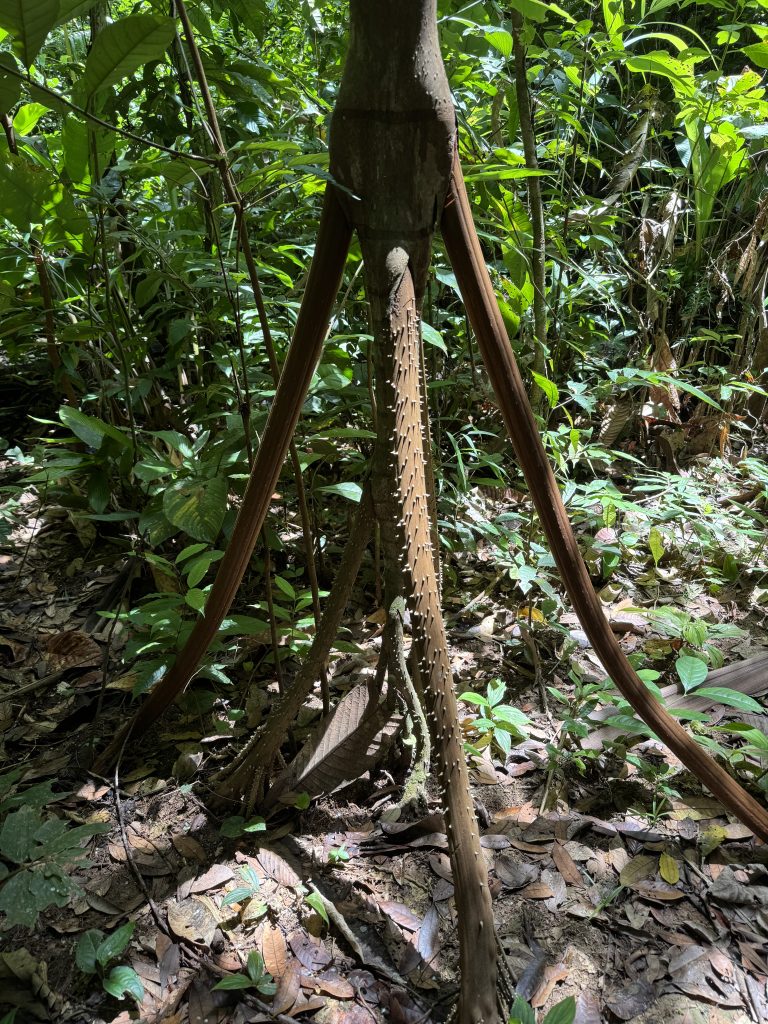
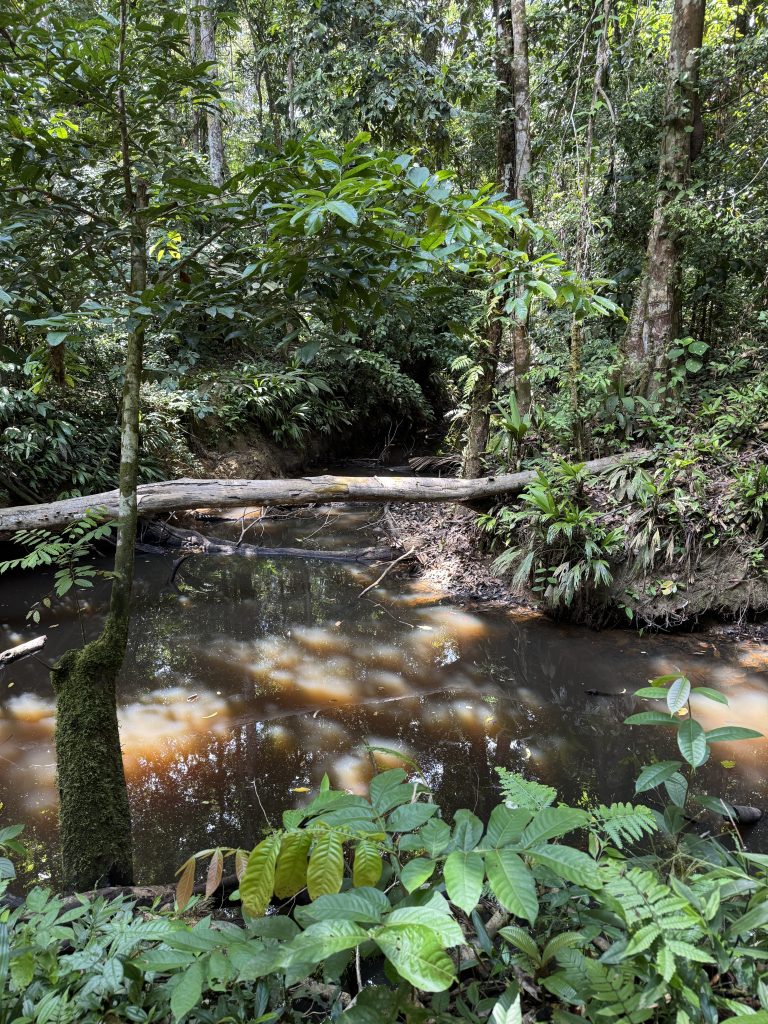
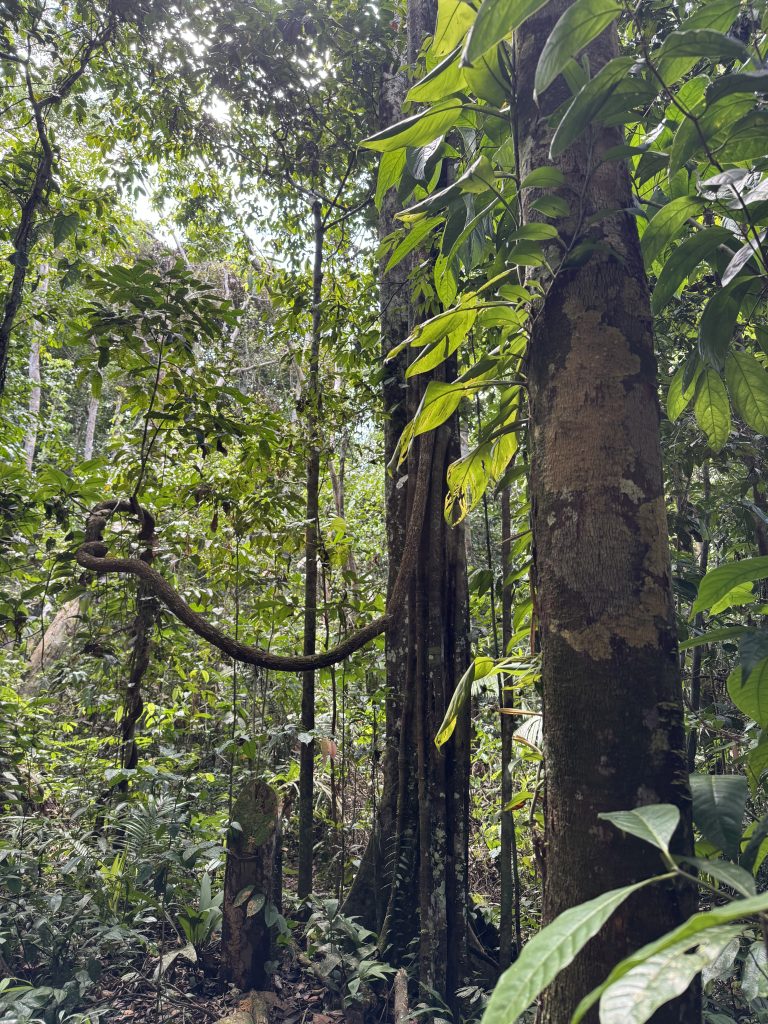
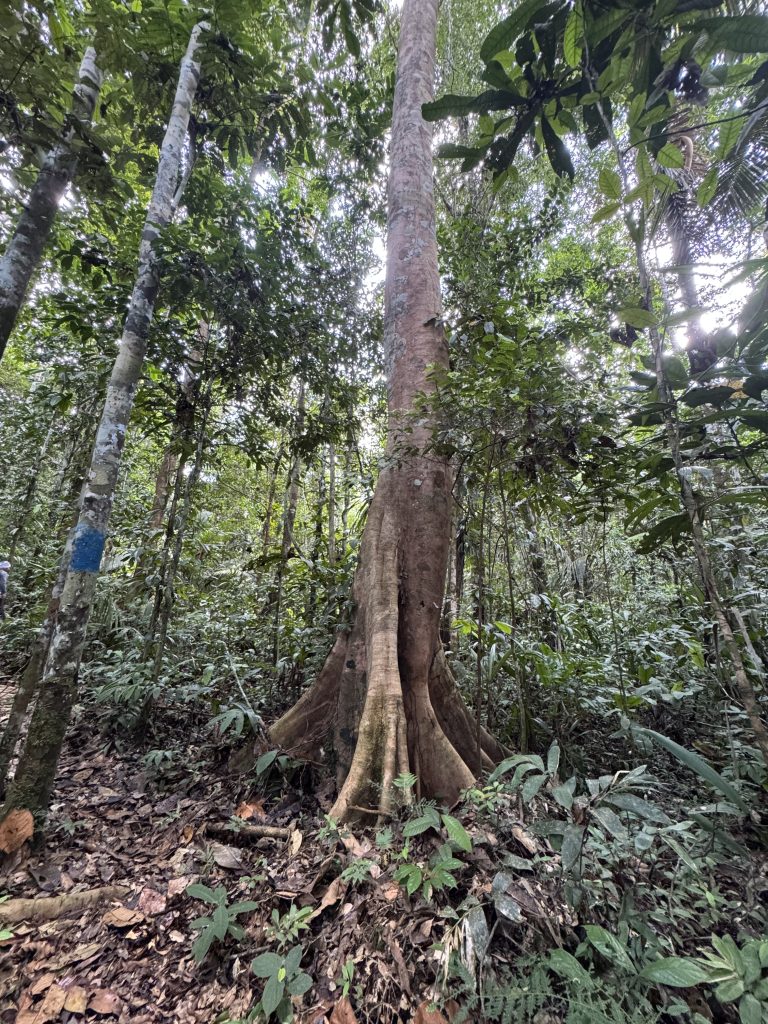
Later that morning I went on a jungle hike with Jorge. It ended up being all men and me, and I stayed mostly toward the back of the group, which was fine with me because I could move at my own pace and look around. Jorge was carrying a machete and cutting through things as we went, and at some point he made me a walking stick that I absolutely loved. He carved it so there was this little notch where my thumb could rest, and the way my thumb fit into the exposed inside of the wood felt almost like I was leaving a thumbprint on the tree. I don’t know why that sensation was so satisfying to me, but it was, and I loved using the stick for the rest of the hike.
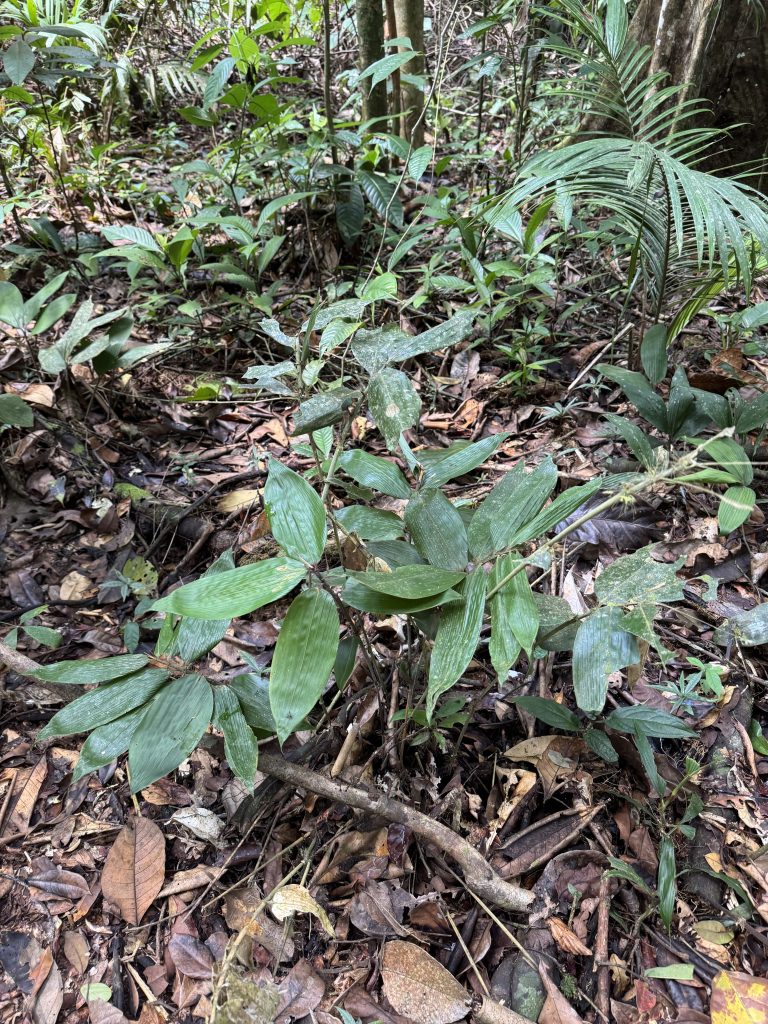
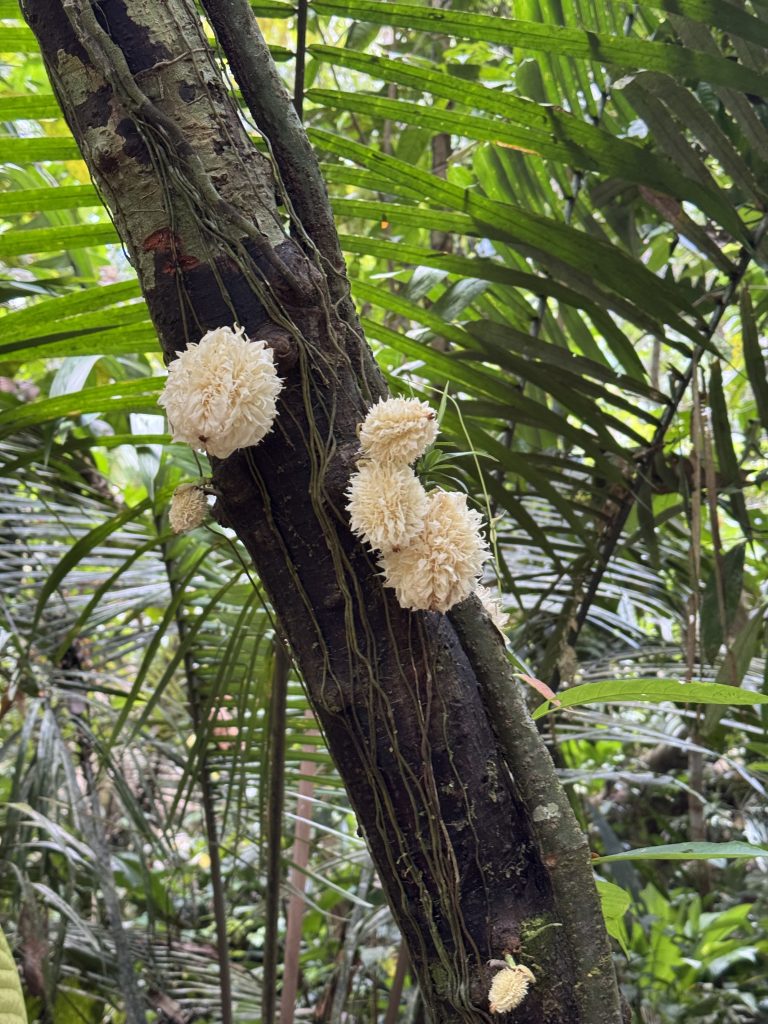
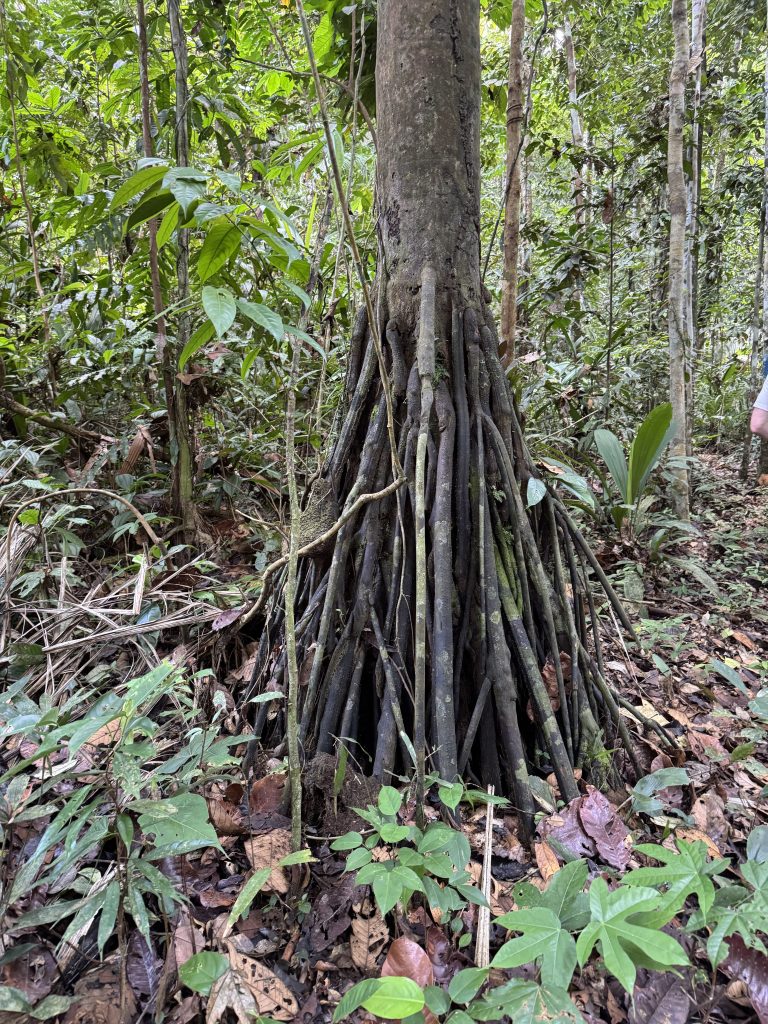
We saw a big blue morpho butterfly, which felt perfect considering the retreat center is called Blue Morpho. Jorge pointed out an ayahuasca vine and all kinds of things growing in the jungle that I would never have recognized on my own. We saw a tarantula, beehives, flowers growing directly from the trunks of trees, and so many different layers of plants and vines that I couldn’t possibly keep track of them all. The sounds in the jungle were incredible too. There is almost never silence there, but there are so many different sounds happening at once that I usually have no idea what I am hearing.
Jorge also showed us what he described as a black magic or brujería tree and told us this intense story about his parents. As I understood it, his father had used black magic involving a dark shaman and the tree somehowwhen he wanted to trick Jorge’s mother into loving him. This included putting some of her hair or something personal into a little pocket in the tree as part of a spell. His parents ended up married for something like twenty years and had nine children, with Jorge being the youngest, but eventually they had a terrible divorce and hated each other. Jorge said that they had so many kids because in the wet season there is nothing to do but make babies. At some point after their divorce, the tree was struck by lightning, and his father died and then his mother became very sick and died too, and there was something about the tree having died that meant whatever had been done could no longer be undone. I don’t completely understand the story or all of the details of what he believes happened, but standing in the jungle looking at the tree while he told us this story about his own family was really intense.
The hike was probably about an hour, and I loved it. I would absolutely not want to wander around that jungle by myself because I would get lost almost immediately, but being there with Jorge cutting the trail and everyone else around me made it possible to relax and pay attention instead of being afraid.



What Tuesday Night Looked Like the Next Day
Later Maestro Hamilton talked with us about the ceremony the night before, and hearing what he actually said was really helpful. He told us that the way the ceremony had gone was not his preference, and I think he said he had drunk medicine three times during the night while trying to help ground the group and bring everybody back. There had also been several points during the ceremony when he stopped the ícaros, spoke to us in English, had everybody breathe, and reminded us to turn our fear off.
The next day he kept emphasizing that whatever we had gone through was gone now, that we did not need to keep going back into it or recreating it, and that we had gotten through it.
Hearing him say that Tuesday night had not been his preference helped me because part of me had been wondering whether I had exaggerated how chaotic the room felt. I hadn’t imagined that there had been a lot going on. At the same time, the fact that Hamilton also would have preferred something different did not necessarily mean that all of the judgments I had made about the people around me were true, and I was starting to separate those two things.
One of the things I noticed the next day was that nobody appeared to be “in trouble.” Hamilton was still talking to people, checking in with them and interacting with them warmly. I did not hear him shame anybody for what had happened the previous night. I can’t know what he was thinking or feeling internally or whether he had judgments that he simply didn’t express, but what I observed was that he continued to meet people with a lot of kindness.
That made me reconsider some of what I had labeled disrespectful. There had been times when people were outside the ceremonial space smoking and talking, and their voices became loud enough that I had trouble hearing what Hamilton was saying. That is something I actually observed. My interpretation in the moment was that they were being incredibly disrespectful. The next day I started wondering whether they had even realized how loud they were. I thought about how people can be in a bar talking and getting excited and their volume gradually rises without anybody consciously deciding to be rude. Maybe something like that was happening, or maybe it wasn’t. I really don’t know.
There were also phones making noise, people looking at phones, people talking, people moving in and out, and Hamilton did not stop the ceremony to correct every one of those behaviors. We had all signed paperwork explaining that certain inappropriate behavior could result in being asked to leave, so clearly there were boundaries around the space, but within what I witnessed, he seemed willing to allow quite a lot to happen without publicly reprimanding people.
What I took from that was a distinction between having a preference and demanding that reality conform to it. Hamilton explicitly said Tuesday night was not his preference, so I know he had one. What I don’t know is exactly how he felt about each individual person or incident. What I could see was how he behaved: he kept working with the room that was actually in front of him.
I had wanted the ceremony to be quieter and more contained, and when it wasn’t, I became furious. Watching him the next day made me start asking whether I could also have strong preferences and boundaries without becoming completely consumed when other people did not meet them.
What I Learned From Talking With Mike
I also talked with Mike, who is from San Mateo, and hearing his account changed the way I understood at least some of what I had witnessed. He told me very matter-of-factly that he had been taken out of both of the first two ceremonies, and he described his experience as having basically blacked out and not really knowing what he had been doing.
Before talking with him, I had been looking at some of the behavior in the room from the outside and thinking, these guys are behaving terribly. Talking with Mike gave me information I simply had not had from my mat. He experienced himself as not fully conscious of what he was doing.
I found myself wondering whether some part of him that he normally kept shut down had come forward, or whether checking out was some kind of protective response, partly because I know what it feels like in my own life to dissociate or check out. But that is my interpretation of what he told me, not something I can know about his internal experience beyond what he actually said.
What also struck me was the way he talked about it. I didn’t hear a lot of shame in the way he described what had happened. He was basically like, yes, I got taken out of the first two ceremonies and I hope I get to stay for the third. Rather than disappearing after an experience that could have been embarrassing, he was still there.
That really touched me, and it also made me question another conclusion I had been making, which was that disruptive behavior necessarily meant somebody did not respect the ceremony. I could observe that somebody yelled, sang loudly, smoked, interrupted, or had to be removed. I could not necessarily know what the behavior meant to that person, what they remembered of it, or what was happening internally while they were doing it.
Respect, Healing and What I Don’t Know
I started thinking more deeply about whether some of the behavior I had found so upsetting could be part of somebody’s pathway through whatever they had come there to work on. I don’t know that it is, and I can’t know what another person’s healing requires, but being in this environment made me more willing to leave that possibility open instead of immediately deciding that I understood what somebody else’s behavior meant.
I think my capacity to sit with people who need to share or cry or yell or growl or have a big experience is actually pretty high. What is much harder for me is when the whole space starts feeling chaotic or out of control, because I have a very high value on people respecting one another and respecting the container.
I also started seeing something complicated about my own relationship with respect. Sometimes my desire not to interrupt or take up too much space means that I don’t participate enough. If people are sharing popcorn-style and I can’t identify the perfect opening, I can wait and wait to ask my question until the opportunity disappears, and then I leave without getting the information or support that I needed.
So I don’t think what I actually want is a room where everybody is quiet and compliant. I want enough consideration that people can hear each other and participate, but I also want a space where somebody is allowed to be awkward, emotional, messy or imperfect while trying to get what they need, and that has to include me too.
Part of my own responsibility is remembering that I can say something. I can ask somebody to speak up because I can’t hear them. I can ask someone to lower their voice because I am having trouble concentrating. I can move. I can ask for help. There are a lot of possibilities between silently tolerating something and becoming furious that nobody has noticed how uncomfortable I am.
Thinking About Men, Mentorship and Grace
Watching Maestro Hamilton interact with some of the men also brought up memories of George and his hunka sons. It was my observation that George gave a lot of love, attention and generosity to younger men around him, including some people whose behavior I sometimes judged pretty harshly. I can remember thinking, I don’t even know if this person deserves everything George is giving him. I had to learn that some who George treated as special and seemed to revere did not live up to his vision of themselves. I trusted my gut to steer clear and later knew that I was right to given the way they chose to behave in the community at times.
Looking back, I am questioning the whole premise of that thought. Maybe love was not something George was handing out according to who had behaved well enough to deserve it.
I have wondered whether there were people who had shown up for George when he was younger or when he had lost his way and whether that influenced the generosity he later offered other people. What I do know is what I witnessed: he could be extraordinarily generous with his love, and that generosity had a profound effect on a lot of people.
There is that saying about needing love the most when you deserve it the least, and seeing Maestros Hamilton and Christian with some of these men brought that back to me.
I watched them continue trying to support people who were having very difficult experiences. I saw Hamilton go outside and talk with Nathan. I saw them try to help people stay grounded and remain in the ceremonial space when they could. I did not see them humiliate anyone for struggling.
I found myself thinking about how valuable it can be for men to have older men whom they genuinely look up to and who can offer strength without humiliating them. That is partly my interpretation of what I was seeing, because I cannot know exactly what those relationships meant to the men involved, but it reminded me strongly of what I had seen around George.
There were also moments when I wondered whether being around somebody as powerful and confident as Hamilton could activate competition or ego in another man, almost like an urge to match the energy in the room. Again, I have no idea whether that was actually happening for any particular person, and I don’t want to turn my speculation into an explanation for somebody else’s behavior. What I actually observed was much simpler: there were some very activated men in the room, and Hamilton generally remained calm while working with them.
Several times the intensity became enough that he stopped what was happening, spoke to the group and brought everybody back to breathing. So he wasn’t doing nothing and he wasn’t simply allowing absolutely anything. He was intervening. What struck me was the way he intervened, because what I experienced was much more grounding than punitive. Yet he did not hesitate when necessary to have Jorge and some others come in and remove people when they clearly needed to leave.
That was when I started questioning the question I had been asking Tuesday night: why isn’t he keeping everybody under control?
Maybe control wasn’t the thing I was actually looking for.
Maybe what I wanted was enough containment for people to be safe, enough guidance to help bring people back when they were overwhelmed, and enough freedom for people to still have their own experience.
I don’t know exactly where that line is, but there were several times when people had to be removed from the space. But I was beginning to see that there is a difference between creating safety and requiring everybody to behave in the particular way that makes me feel most comfortable.
That made me think about Medicine Path ceremonies too, because there was a time when it seemed almost unthinkable for somebody to leave before ceremony was over, and I remember once needing to leave and feeling how not okay that seemed. More recently, I have watched people recognize that they are exhausted or have reached their capacity and need to go. Sometimes they say goodbye and sometimes they just leave.
What I observe is that people make those decisions for themselves, and the meaning I am starting to take from that is that there is a limit to how much any of us can direct another person’s process. We can offer support, we can make things available, and we can have boundaries, but eventually somebody else gets to decide what they are ready for.
You can show somebody a door, but you cannot make them walk through it. You also cannot make them stay if they want or need to go.
One of the things I am learning is how to leave more room between what I see someone do and what I decide it means about them.
A Little Work in the Amazon
After lunch I did some work, which continues to be such a strange juxtaposition with everything else happening here. I did some client work and went through my emails and made other updates. I feel like I have been able to keep enough things moving that nobody feels completely abandoned while I am away, which makes me feel better, although I know I am going to have a lot waiting for me when I get home.
There is something very funny about spending the morning walking through the Amazon jungle with a machete-cut walking stick, thinking about ayahuasca and black magic trees and the nature of healing, and then opening my computer and doing website work for a few hours, but I also kind of like that both things can exist.
Back Into the Jungle at Night
After work I showered and had dinner, and then that night I went back into the jungle for another hike.
It was basically the same trail we had done during the day, except we did it in reverse and there were a lot more people with us. I brought my walking stick again. I was really glad I went because the jungle felt completely different at night.
Without being able to see everything clearly, I became even more aware of how much sound there was around us. There were noises everywhere, and I kept trying to figure out what animals were making them. At one point there were two completely different sounds that I thought might even be different animals, and afterward I asked Jorge about them and he told me they were actually the same kind of bird making two different sounds. I need to remember to ask him again what that bird was called.
The hike was about an hour, and I felt safe being out there with the group, although there is absolutely no way I would go wandering into that jungle alone because I would get lost in about five minutes.
Afterward I had some tea and hung around for a while, and thankfully it was much cooler that night. Everything here is still damp all the time, my clothes never really seem to dry and everything smells a little bit like the jungle now, but Wednesday night I finally slept really well. I think I went to bed around 9:30 and slept until about 6:30 the next morning, which felt amazing after the first couple of nights.
I had spent Tuesday night feeling like the ceremony had gone wrong, and by the end of Wednesday I didn’t really feel that way anymore. I still didn’t like everything that had happened, and I didn’t have to pretend that I did, but I could see that there was so much more happening inside other people than I could possibly know from watching them, and I was beginning to see how much there was for me to learn from the difference between what I observed, what I interpreted, having a preference, and needing reality to conform to it.
I think that was part of the medicine too.